The second leg of our RV trip took us deep into British Columbia, Canada, a province that is 700 miles long and 660 miles wide. We went in search of grizzly bears–scroll down to see if we accomplished our goal!
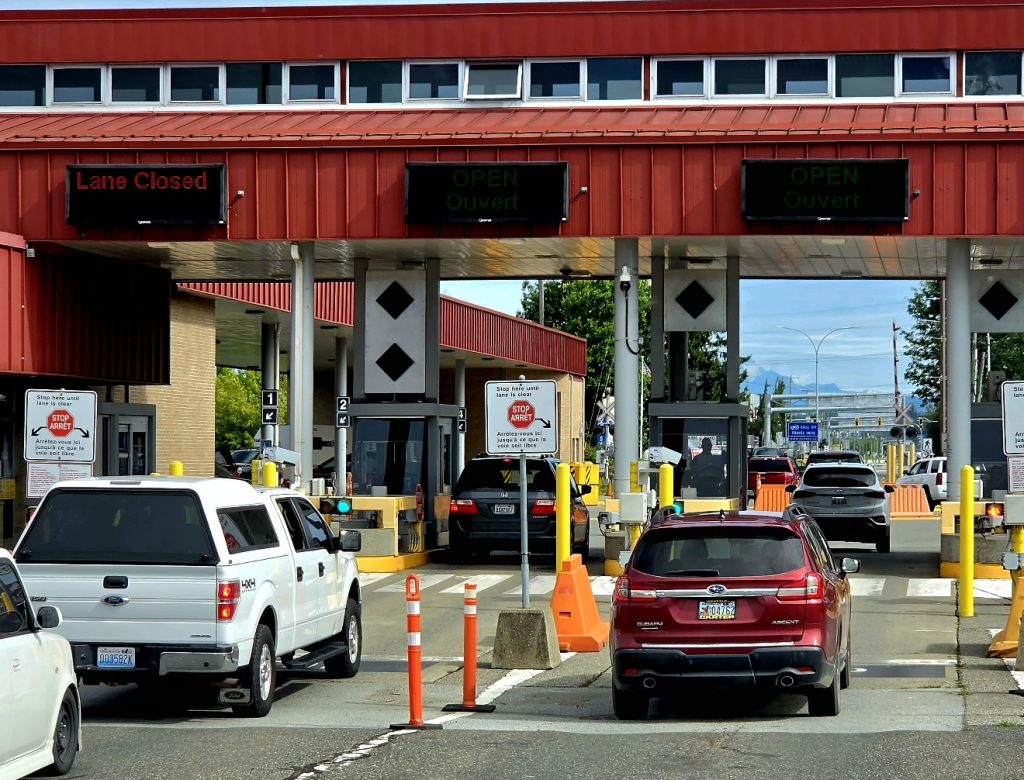
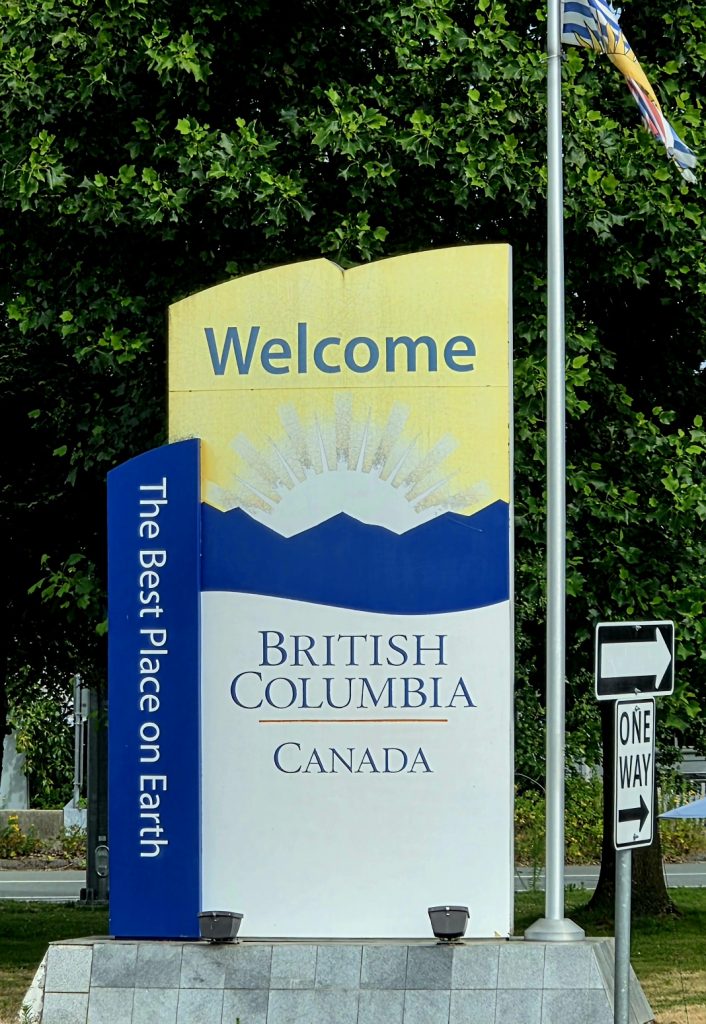
After easily crossing the US/Canada border at Sumas, Washington (near Abbotsford, BC), we encountered two big challenges on our first day in Canada. First, the road we had planned to take (the Trans-Canada Highway 1 from Hope through Cache Creek along the Fraser River Canyon) was closed due to a wildfire. So we took a slightly longer route through Kamloops, which turned out to be a blessing in disguise. (All photos and videos are by Hank and Cindy, unless otherwise noted.)
Crossing the border at Sumas, WA
And entering British Columbia
Shortly before we got to Kamloops, we got an emergency notification that one of our hydraulic jacks on the motorhome was down. When Hank stopped to check the jack, it wasn’t down, but it was leaking fluid, so we knew we probably had a broken hydraulic hose. I started calling around and finally got to a company that could examine the jack that afternoon. Jennifer and Derrick from Kamloops Hydraulic Truck and Crane were wonderful and in just over an hour, Derrick had diagnosed the problem and replaced the hose, and we were back on the road, getting to our campground in Clinton, BC, just before 5:00 p.m.
This was our meet-up spot with our first caravan partners, John and Sharon, who had also been rerouted onto the longer route because of the fire. We enjoyed a wonderful Halibut and Chips dinner prepared by our campground hosts (Big H’s Halibut and Chips) and were glad to get to bed after a LONG day.
Meeting up with John and Sharon, who are also from California
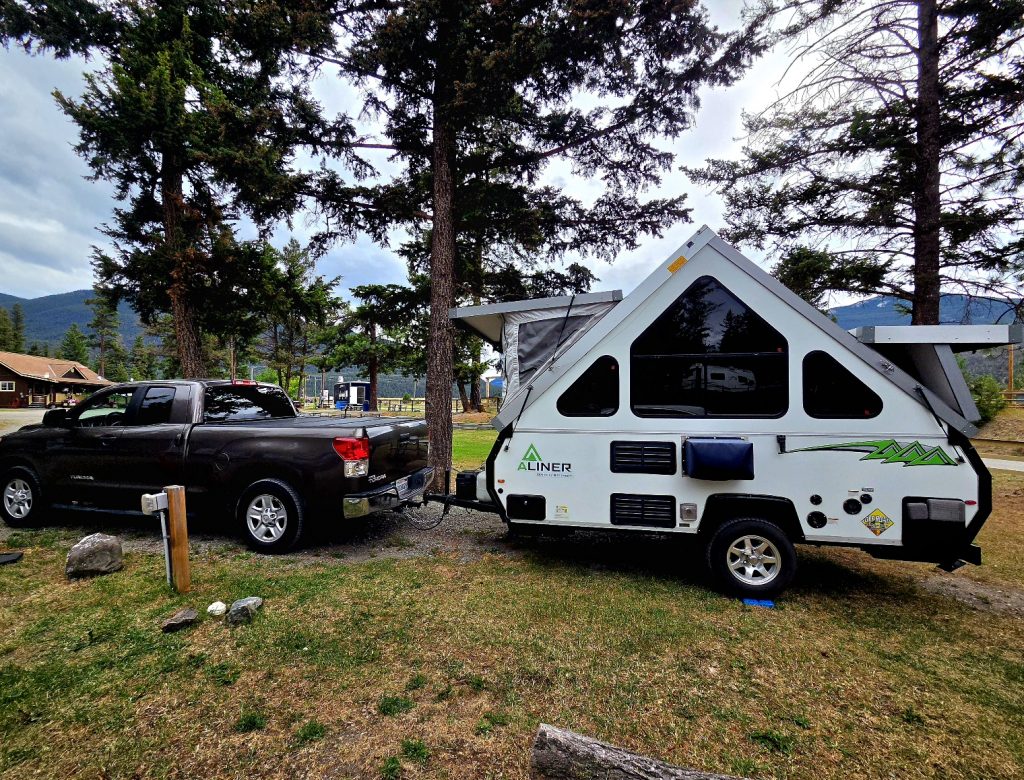
Sharon and John have a very cool trailer!
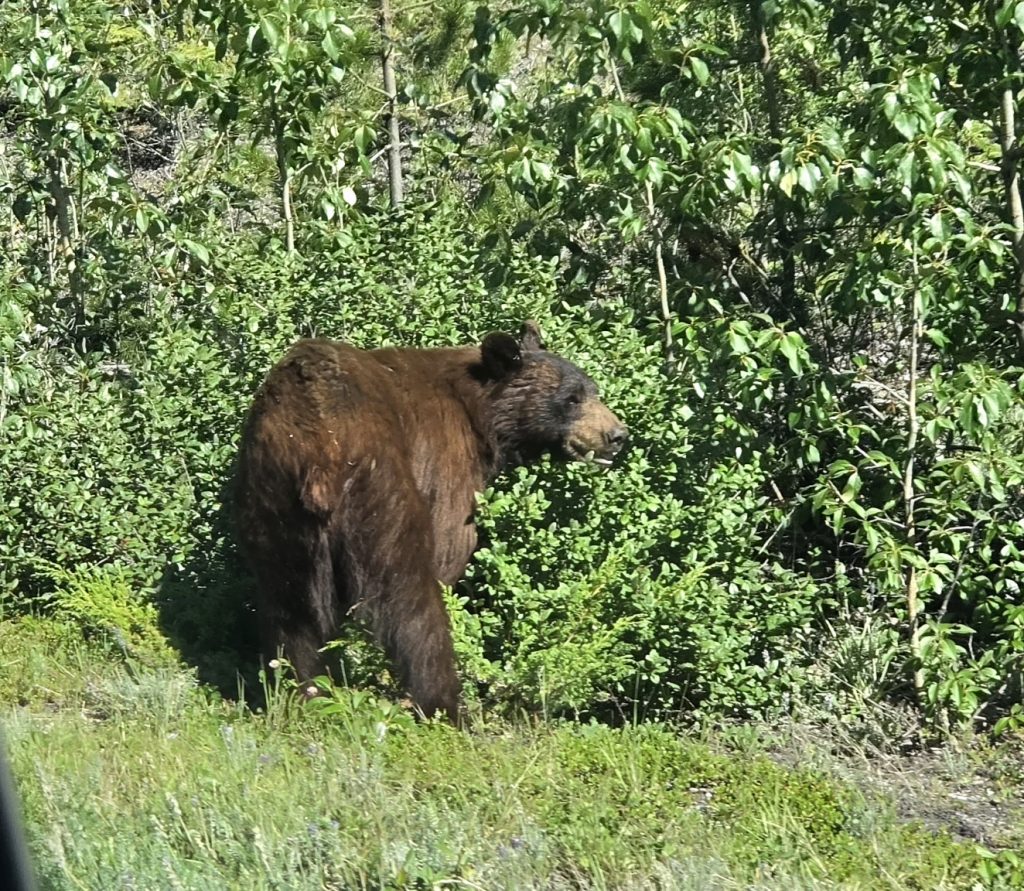
Driving through central British Columbia the next day, we started to see wildlife along the way, including a black bear, several deer, and some bald eagles. We enjoyed a stop at the South Cariboo Visitor Centre with its world’s tallest cross-country skis and lots of birds.
The world's tallest cross-country skis!
The beautiful Visitor Centre in Williams Lake
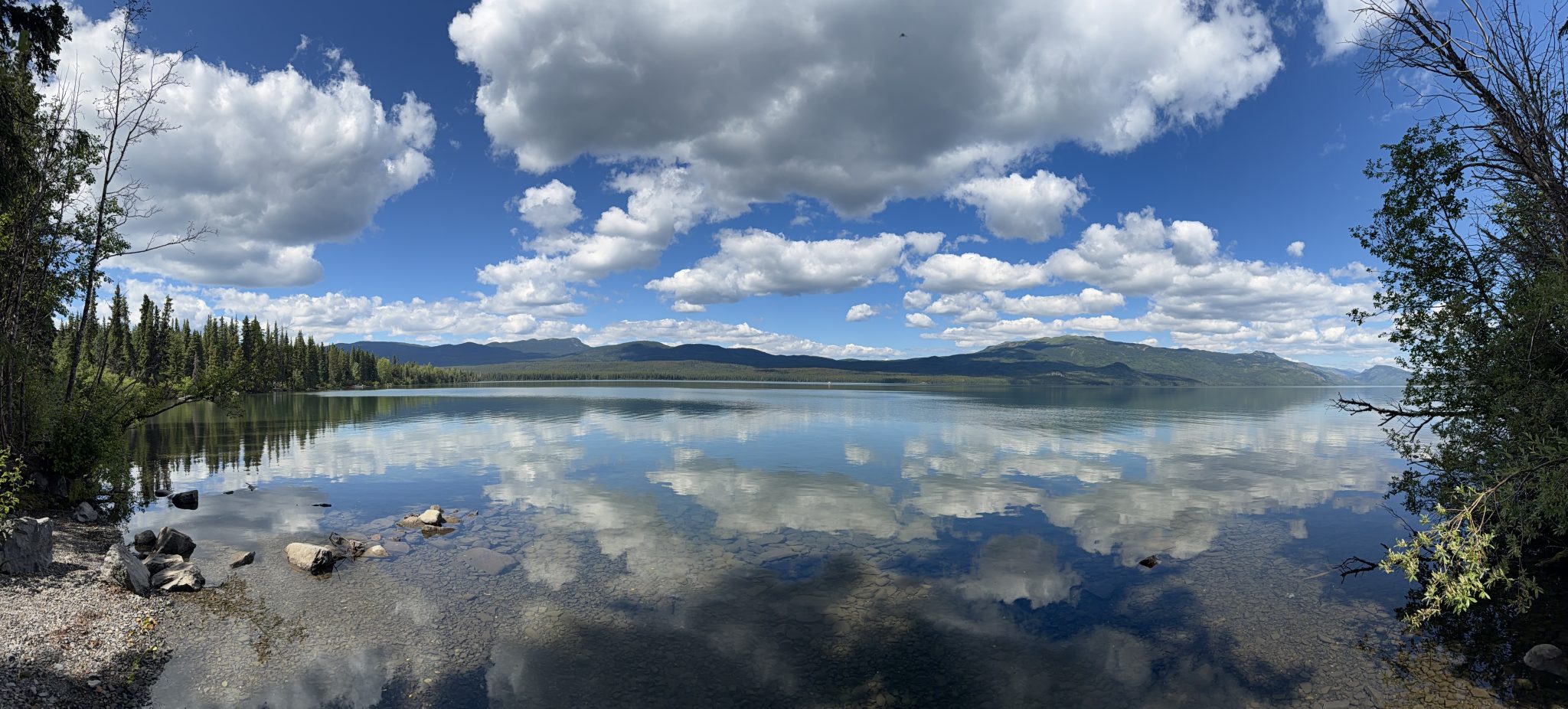
The Williams Lake Visitor Centre was our lunch spot and we enjoyed many beautiful scenes as we drove past one lake after another.
When we got to Prince George, we connected with our second set of caravan partners, Jacky and Howard, with whom we have camped before (the last two summers in Jasper National Park). Prince George is a great place to get groceries, do laundry, and get any repairs or vehicle service needed before heading out to more remote locations.
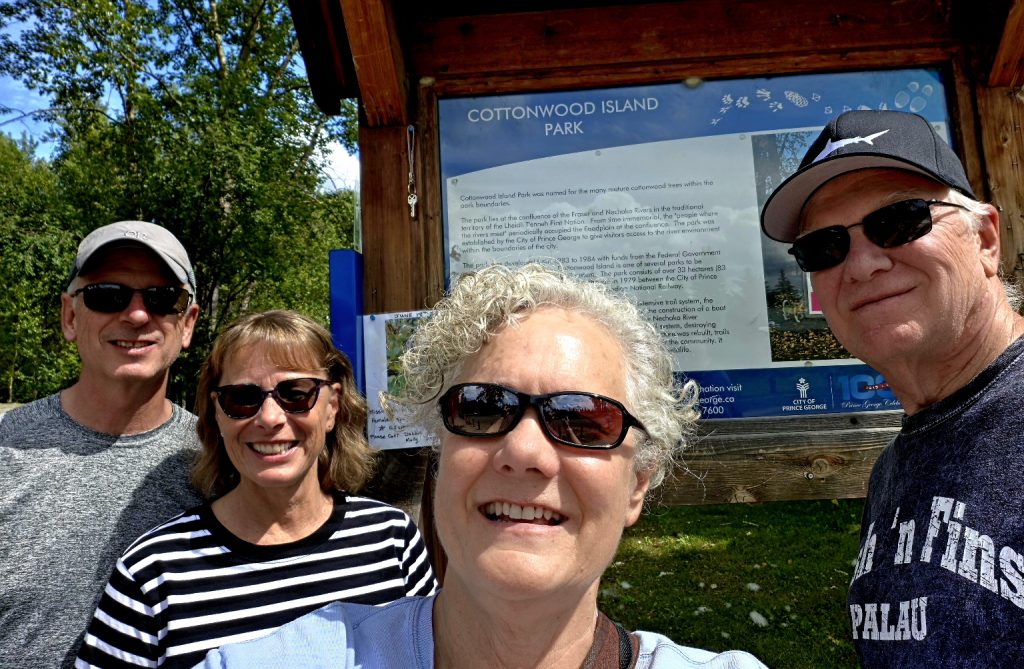
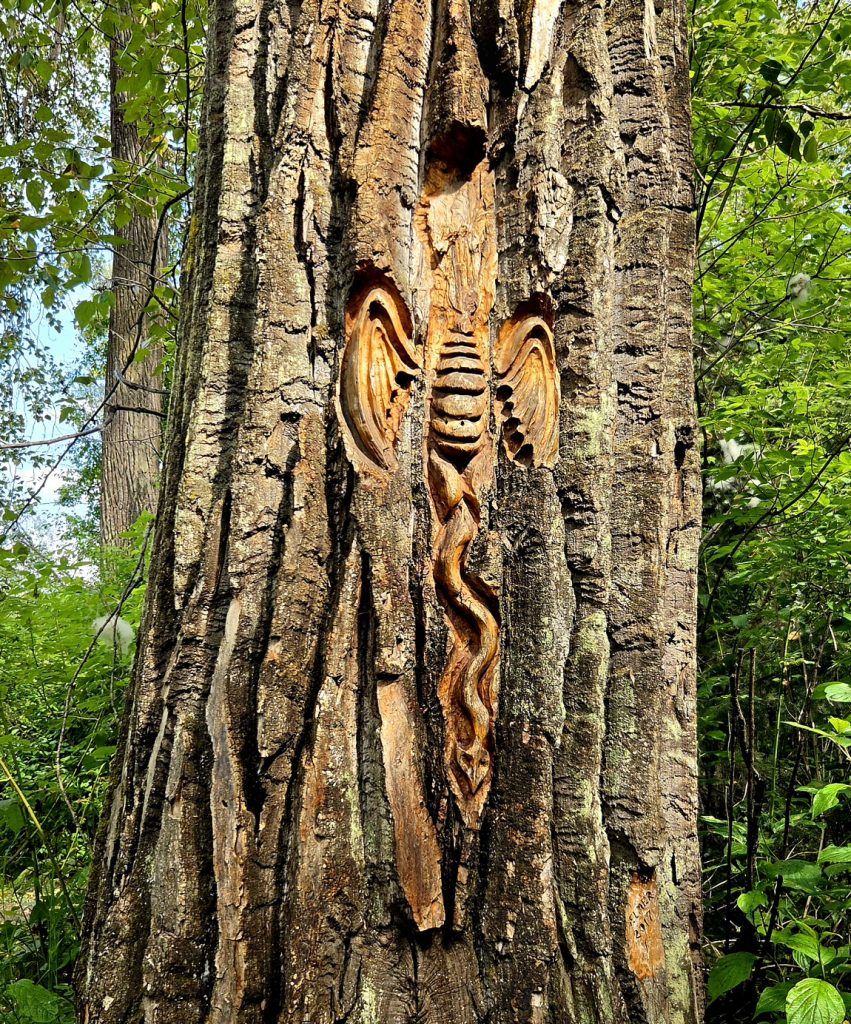
After our chores were done, we headed to the Cottonwood Island Nature Park, where a local artist, Elmer Gunderson, has carved faces and figures into some of the mature cottonwood trees. It’s a pretty walk along the Fraser River, complete with lots of mosquitoes (we knew to come prepared with head nets and repellant).
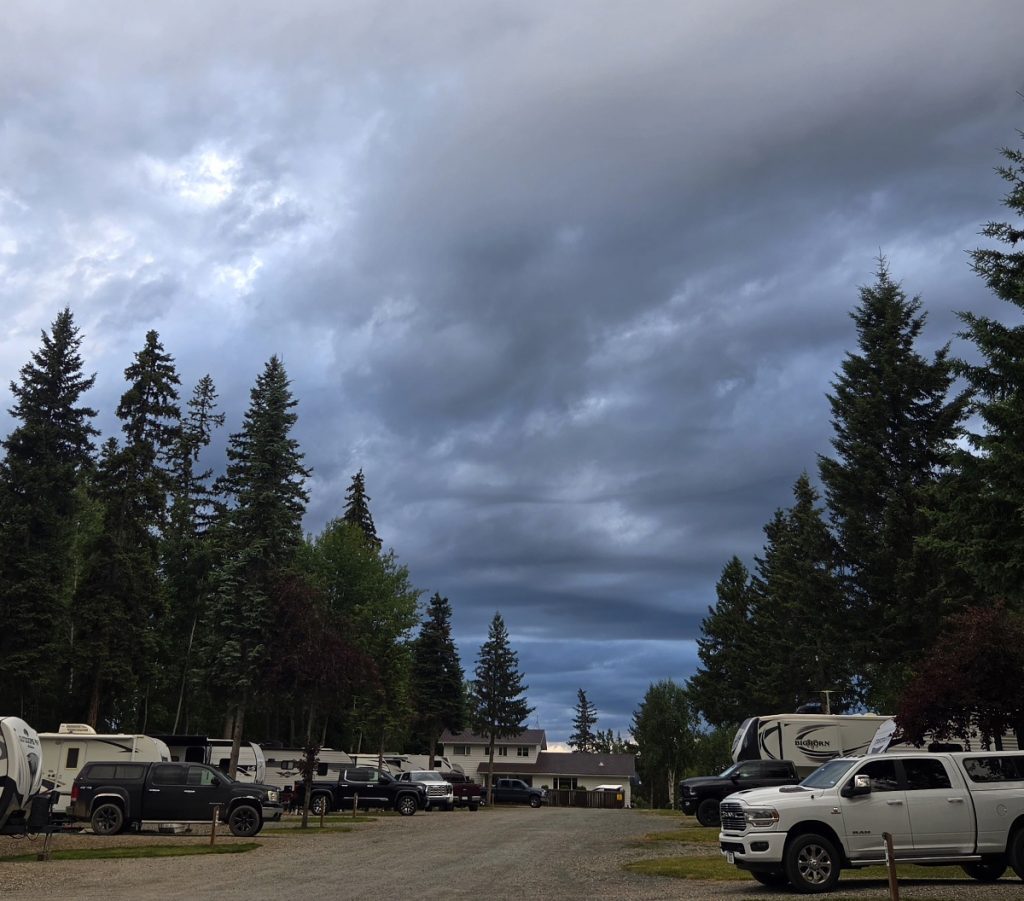
A forbidding sky in Prince George, BC
Hiking with Howard and Jacky, our second set of caravan partners
Cottonwood Island Nature Park has original artwork in some of the trees.
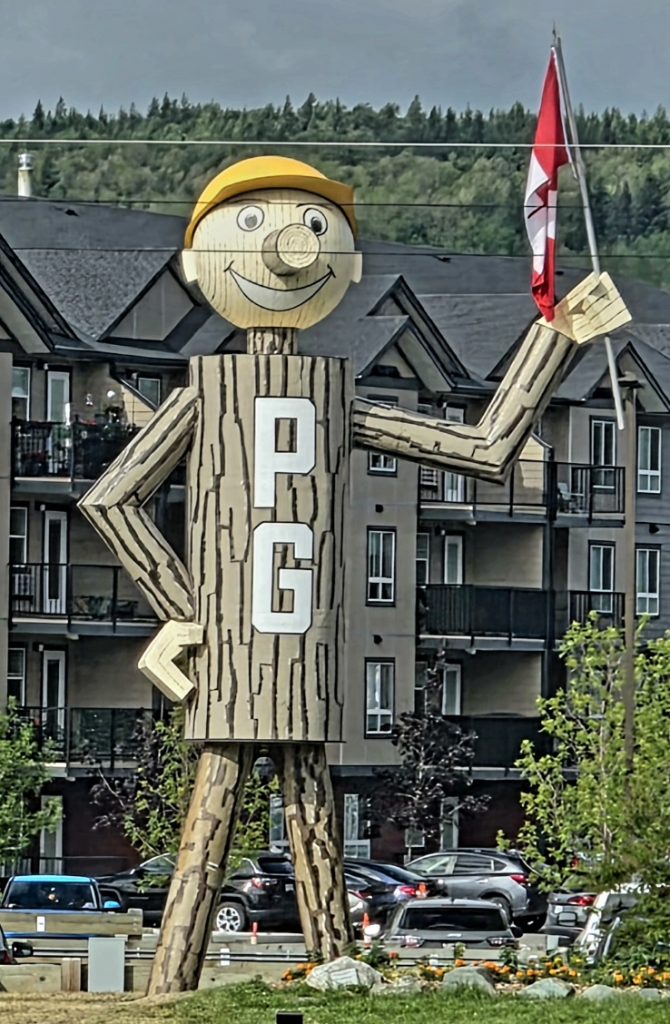
Mr. P.G. is a landmark in Prince George.
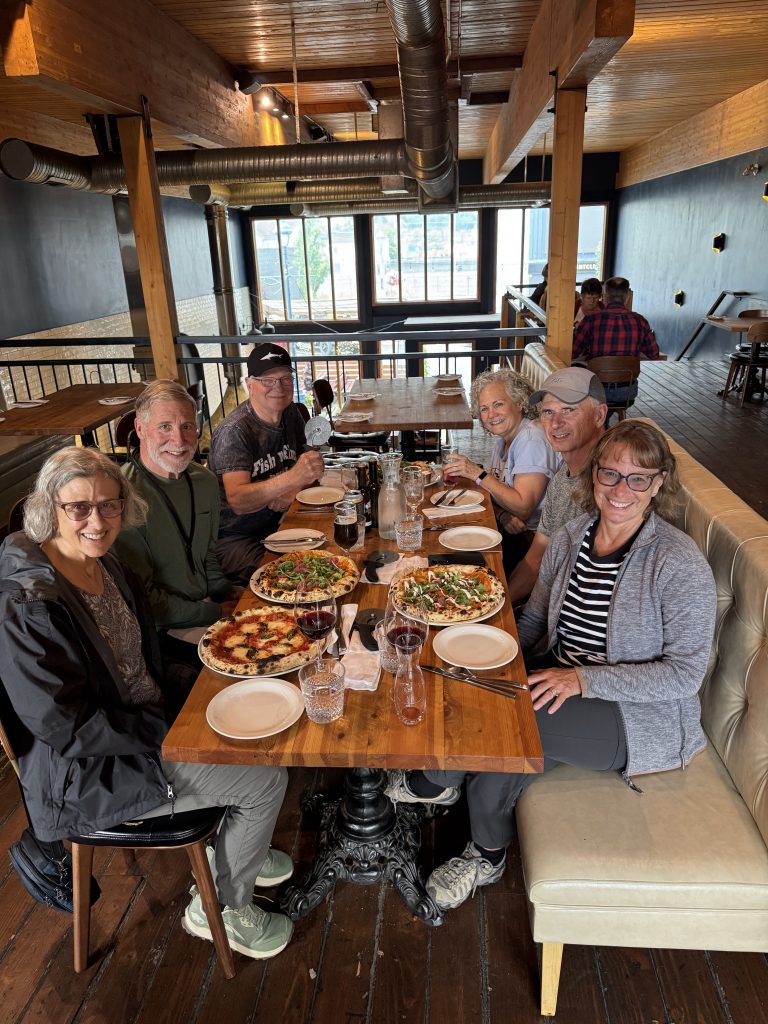
We refreshed ourselves with great pizzas at Betullah Burning and prepared for our 3-vehicle caravan to depart in the morning.
Our group of 6 enjoyed pizza together after we all got to Prince George (photo taken by waitress).
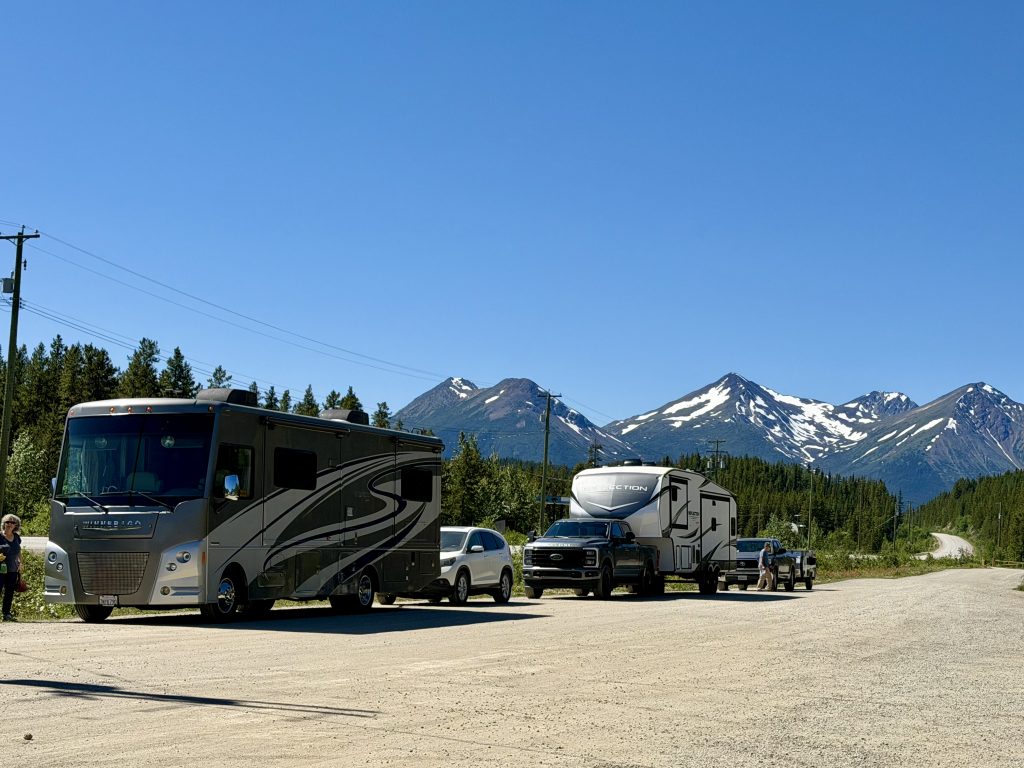
Here's what all 3 RVs look like when lined up at a rest area.
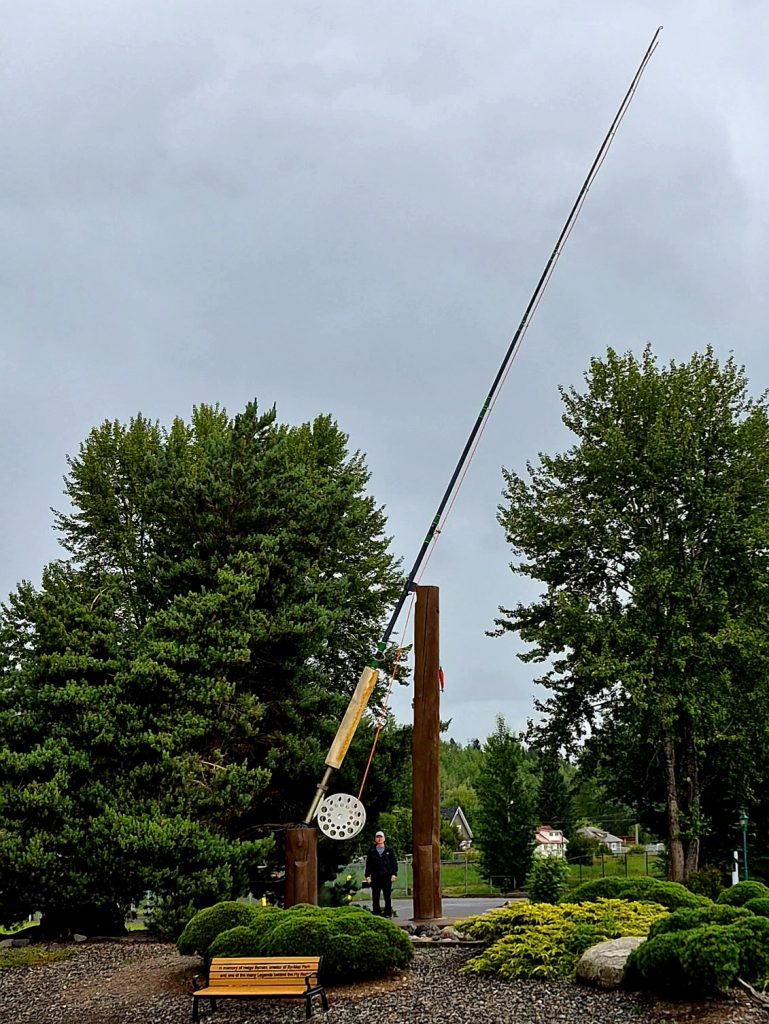
Next day we headed northwest to the small town of Houston, known for having the largest fly-fishing rod in the world. We encountered a bit of rain on the way but were able to enjoy a walk among the wildflowers that evening.
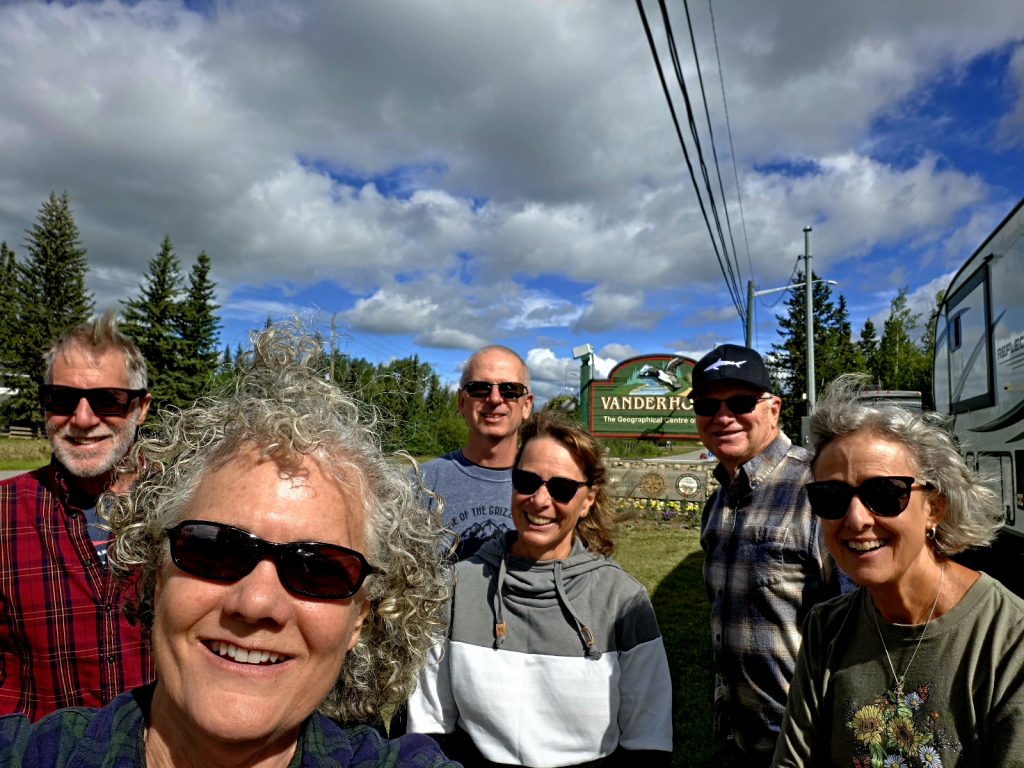
Taking a break in Vanderhoof
The world's largest fly-fishing rod-notice Howard in the photo for scale (photo taken by Jacky)
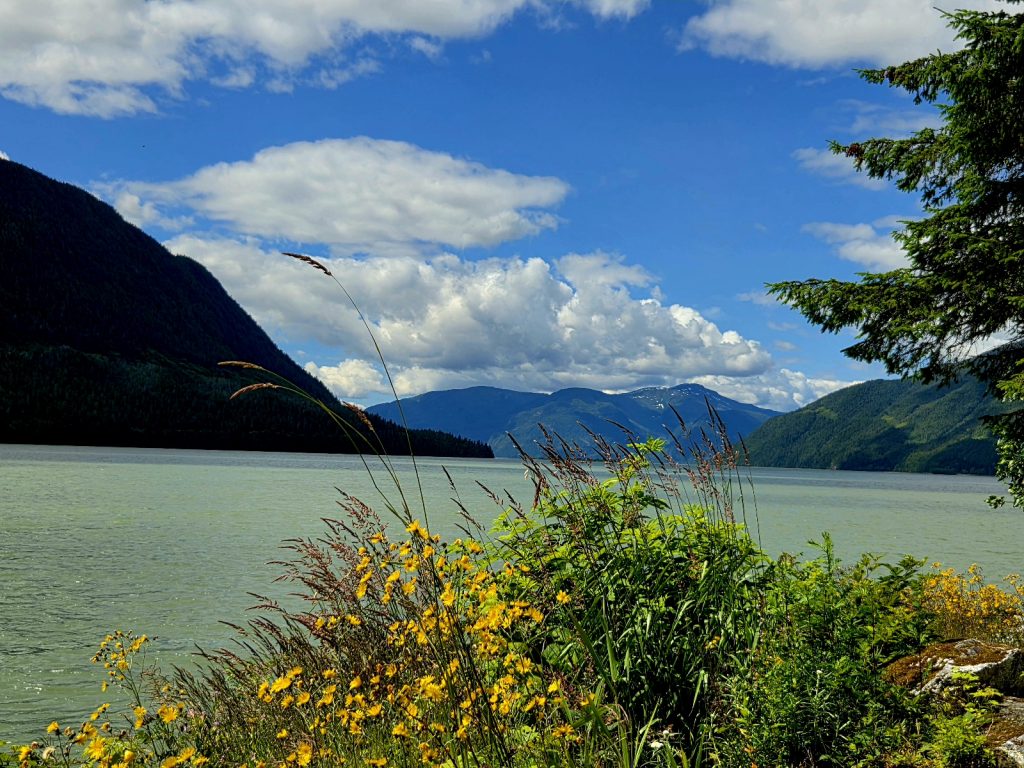
Our next leg took us to the end of the Yellowhead Highway, but not before giving us gorgeous scenic views along the Skeena River.
The Skeena River empties into the Pacific Ocean near Prince Rupert, BC.
Enjoying the beautiful views
Our campground in the small town of Port Edward was right across from some working docks with lots of crabs and fishing boats.
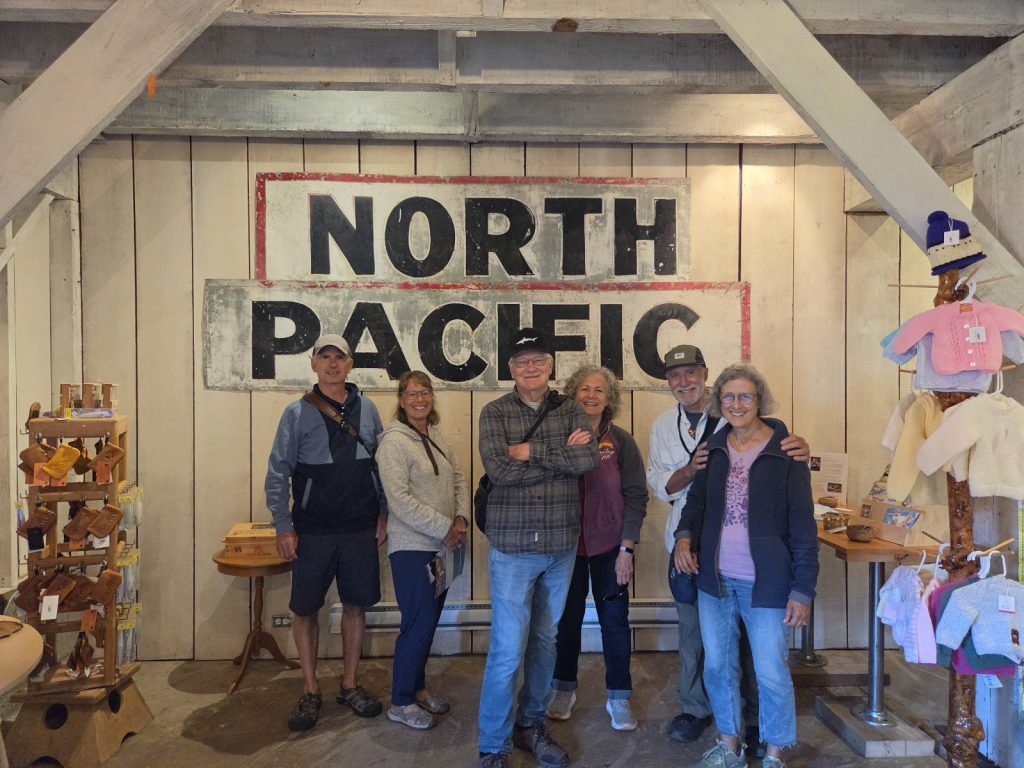
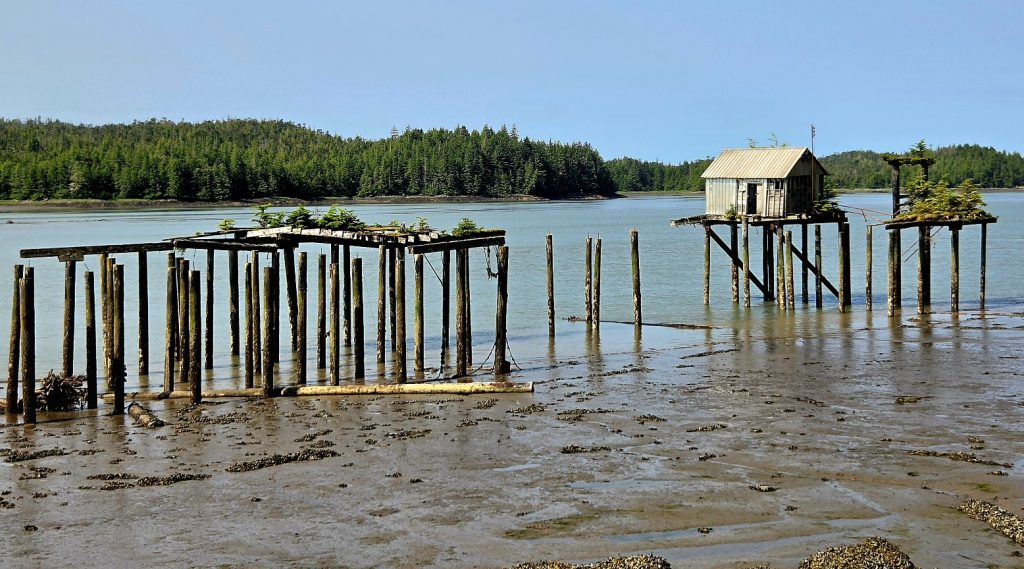
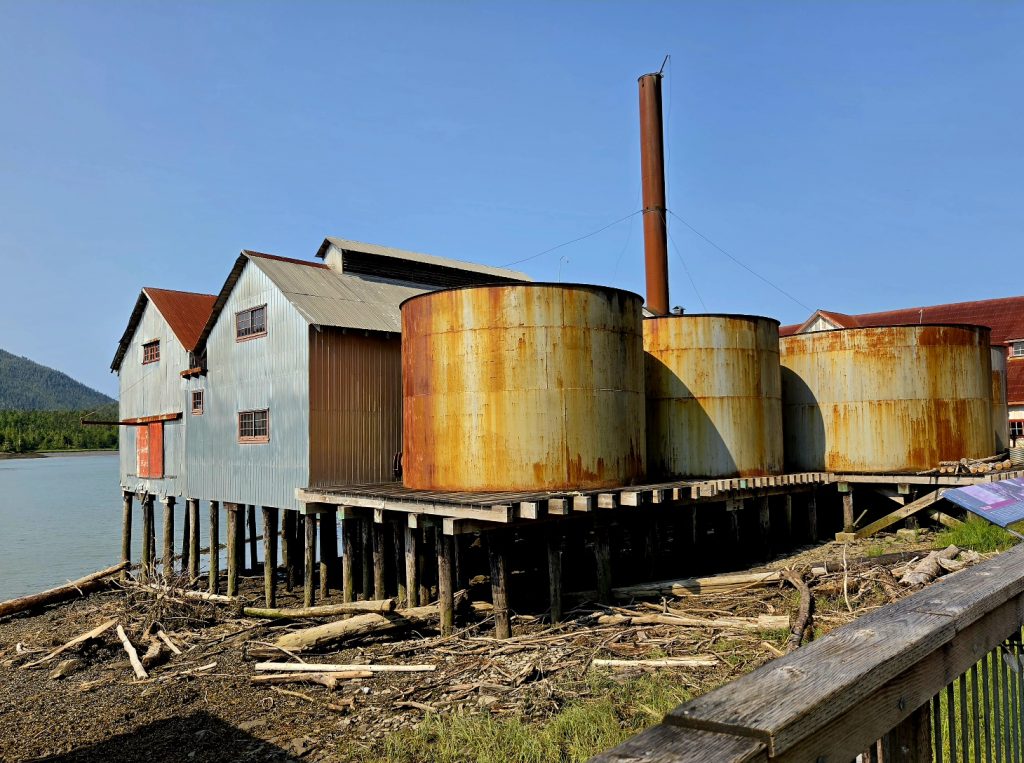
In the morning, we headed along Highway 599 to the North Pacific Cannery National Historic Site for an informative tour of a very large salmon cannery that operated from the early 1900s to 1973. While many buildings have fallen into the bay, several others are still standing, with all the equipment and machinery that was in use at the time of the shutdown. The working conditions for the Japanese, Chinese, and First Nations people who lived and worked there were incredibly difficult (and unsafe), and the business practices that focused solely on profit, rather than on sustainability, ultimately led to the cannery’s demise (and the closing of the other 20 canneries in the area).
The remnants of where some cannery workers lived--yes, up on platforms.
Our tour guide showed us all the old equipment and how the canning process took place.
Many original cannery structures are still there, though worn with age.
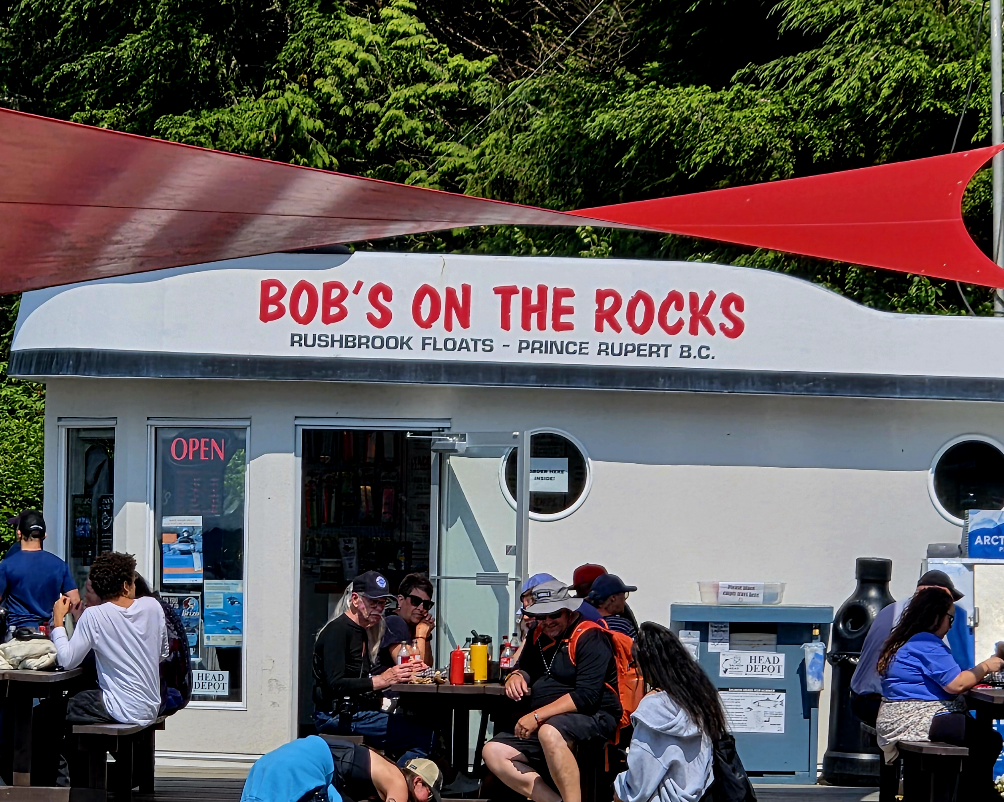
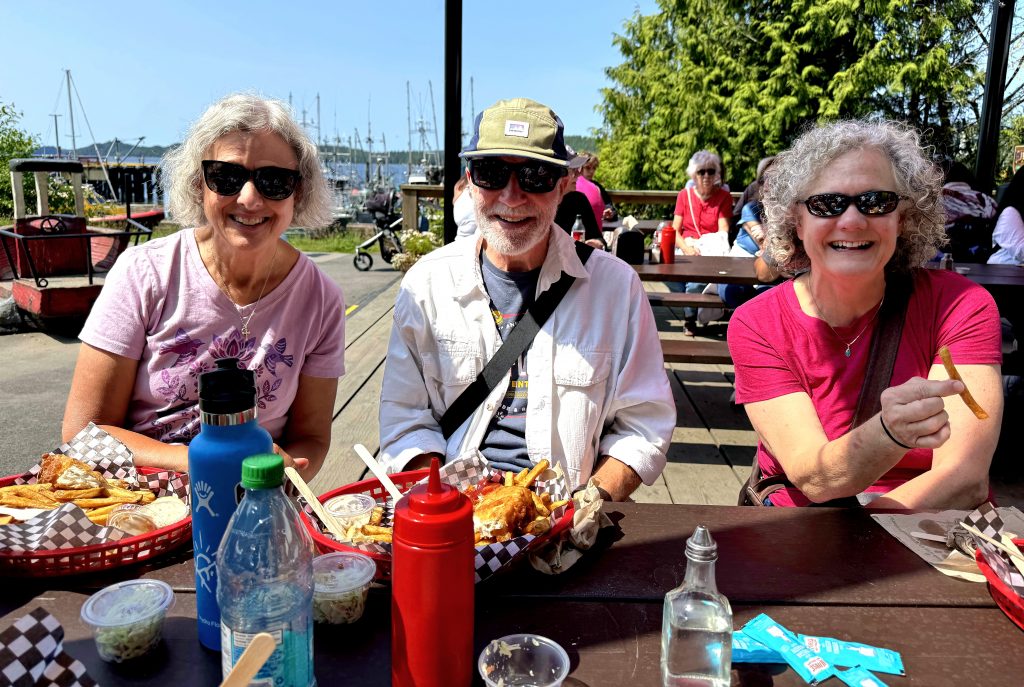
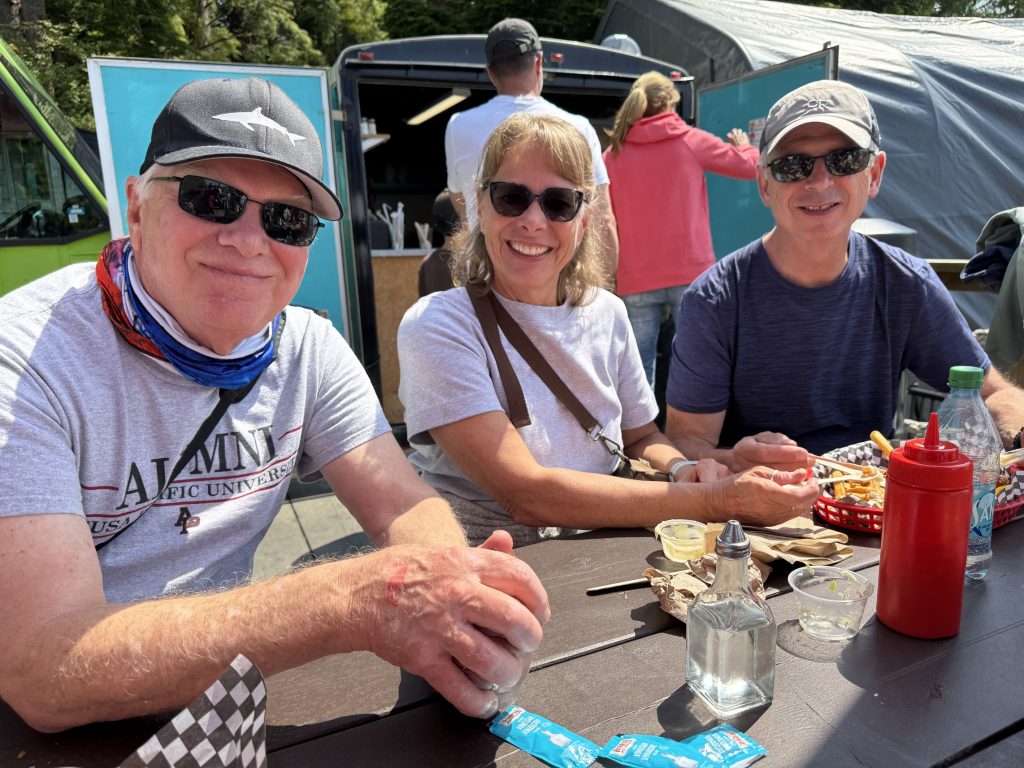
The locals all recommended Bob’s on the Rocks for halibut and chips, so we ventured over to Prince Rupert for an outdoor fish and chips treat. Halibut and chips might be my favorite way to eat fish!
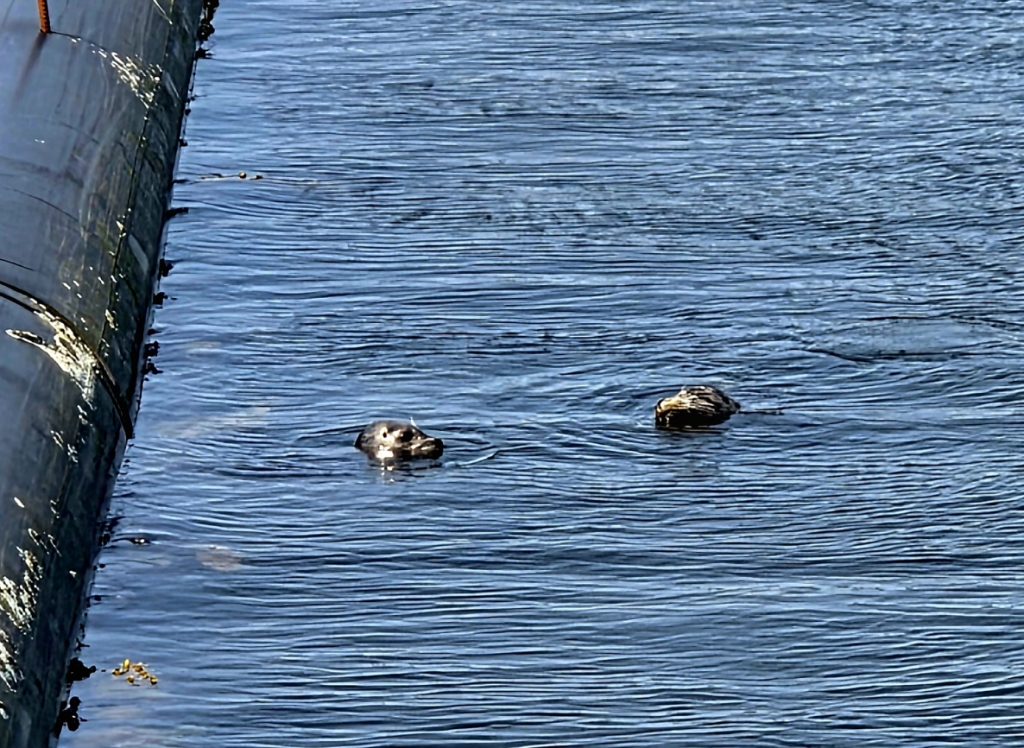
A harbor seal and pup
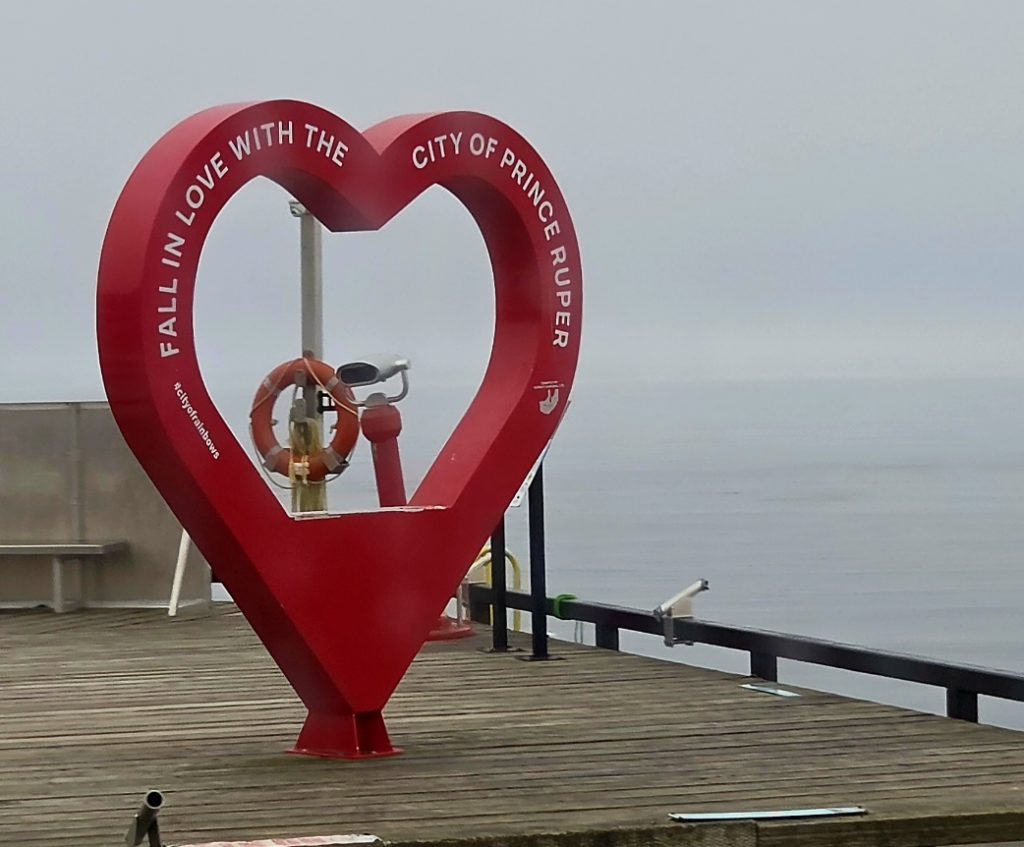
A walk around the various docks and piers of Prince Rupert gave us sightings of freighters, an enormous cruise ship, and several harbor seals, including some seal pups. This city of 13,000 people was targeted as the ending point for the Grand Trunk Pacific Railway. Charles Hays planned to build a large hotel along the lines of the Chateau Lake Louise, but he perished on the Titanic and the city did not become the tourist mecca he had envisioned. Neverthless, it is a beautiful location with lots of outdoor activities available.
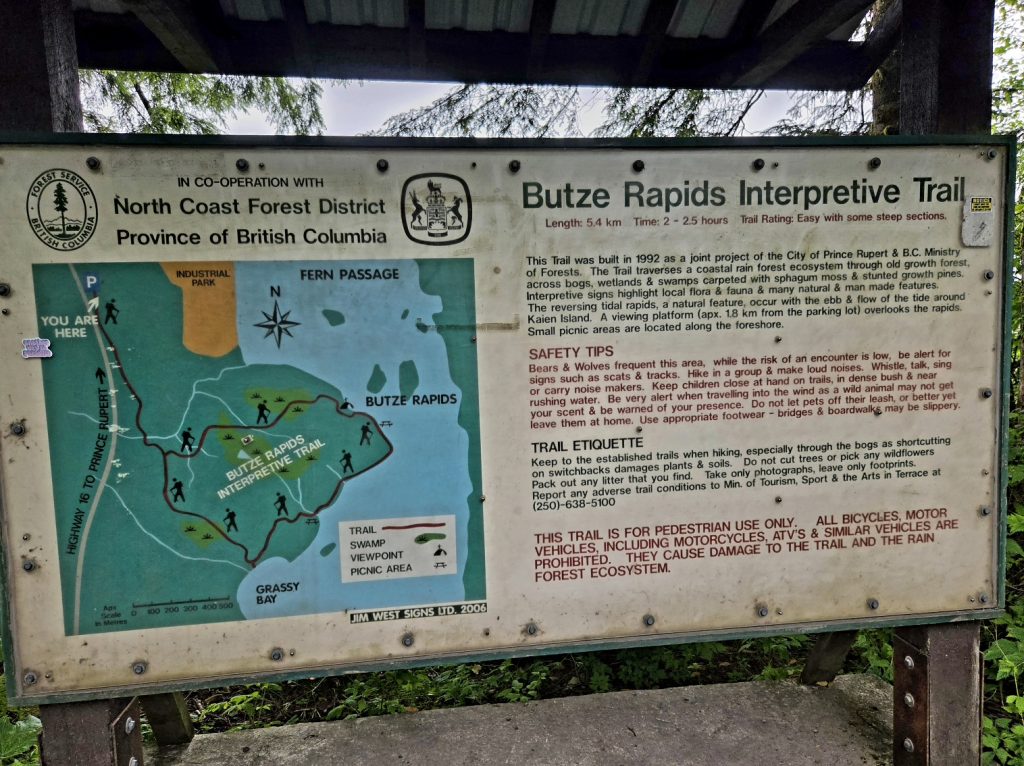
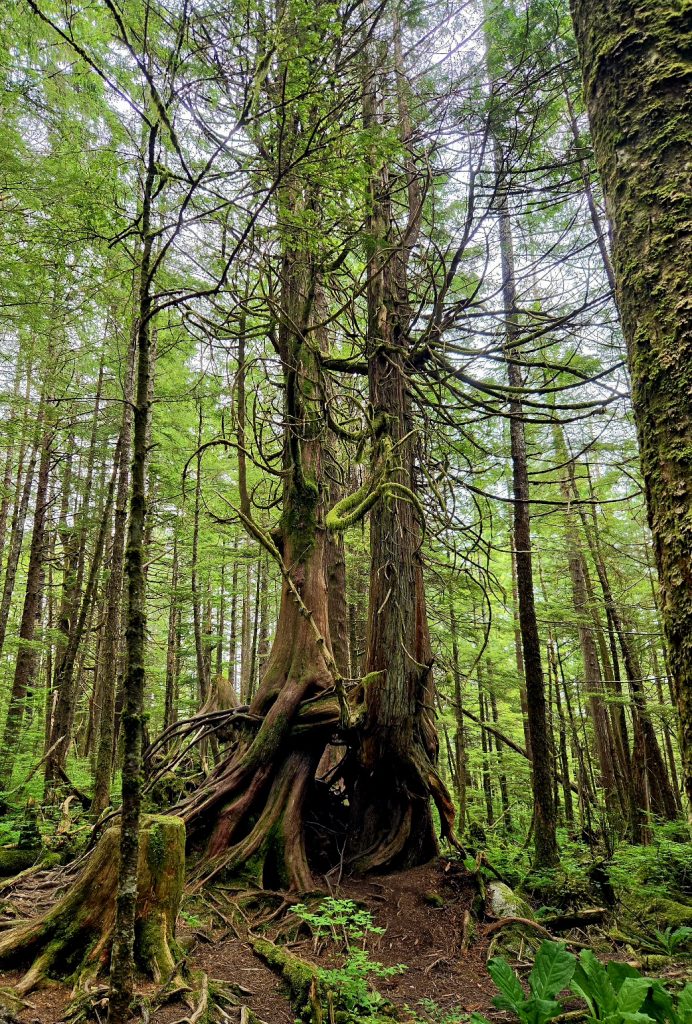
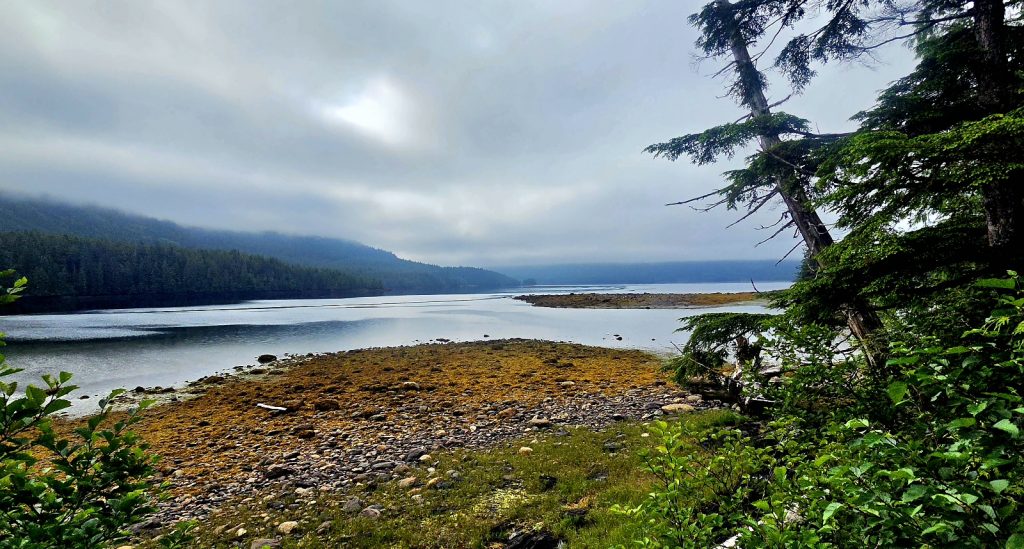
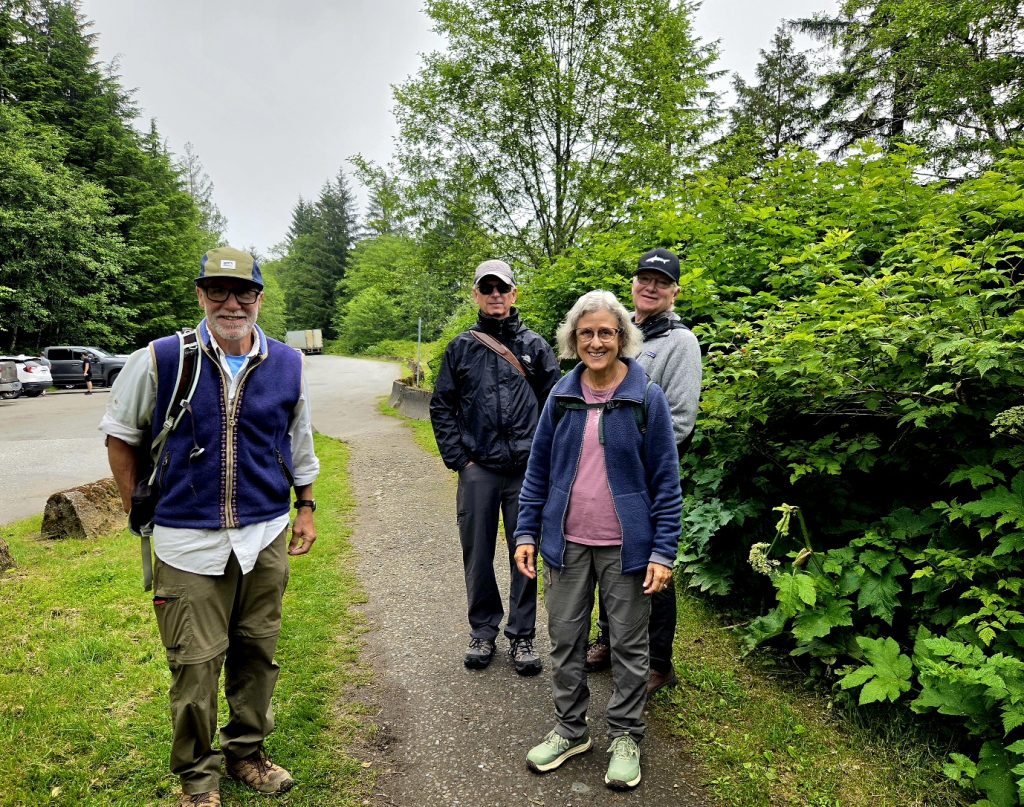
One morning we headed out early for a hike that would take us along the coastline at low tide. The Butze Rapids Trail, between Port Edward and Prince Rupert, was a well-maintained 3.3-mile round trip trail through a temperate rain forest and along a rocky shoreline similar to those we have encountered in Puget Sound, Washington, and Southeast Alaska.
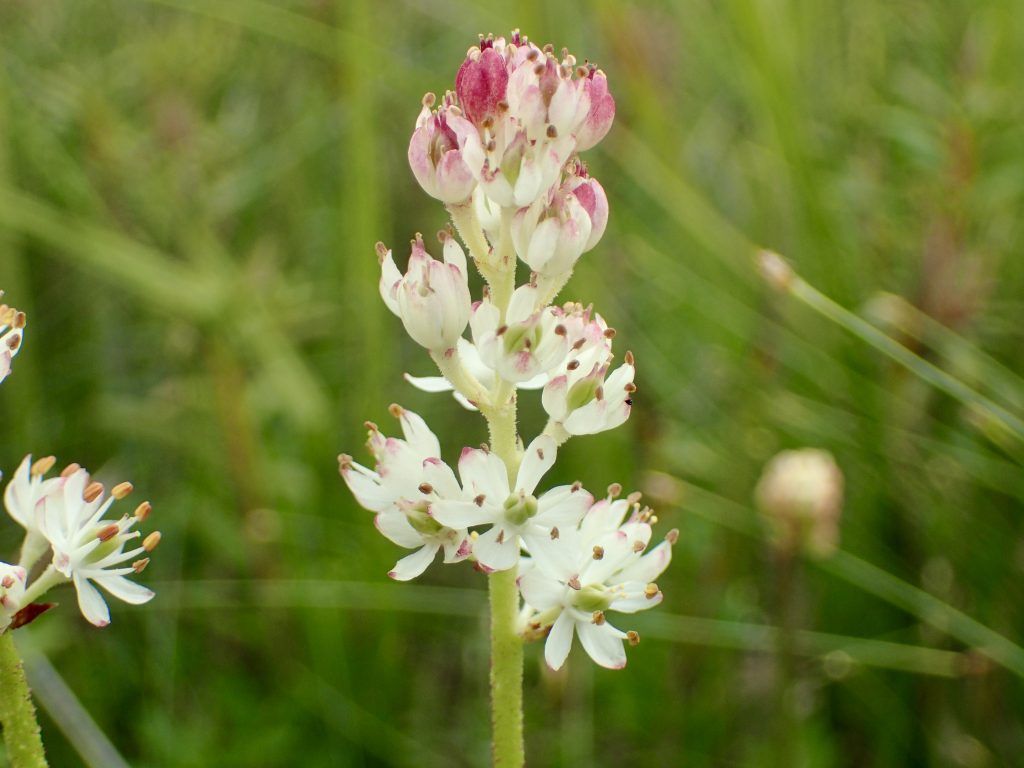
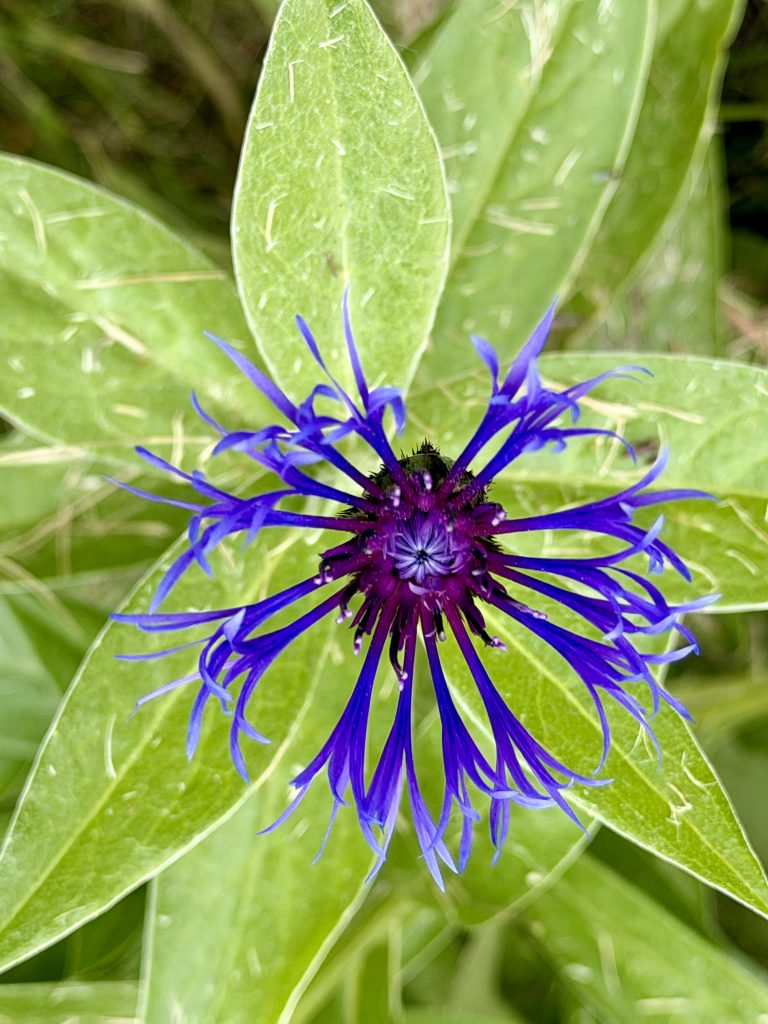
Sticky tofieldia
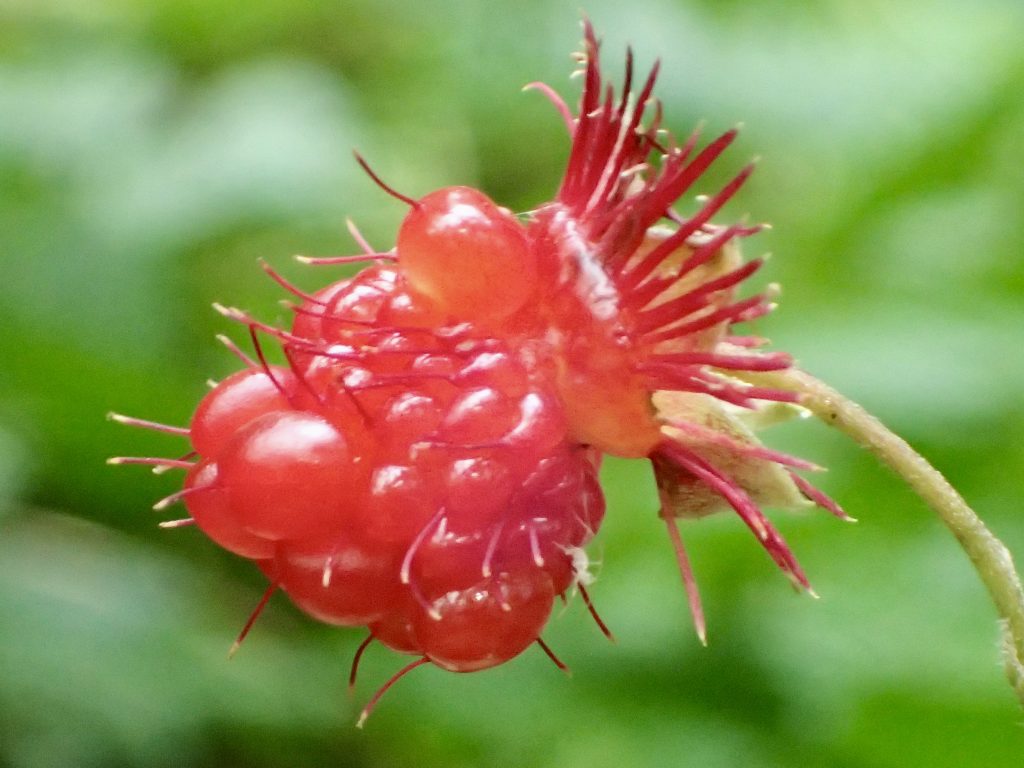
Salmonberry
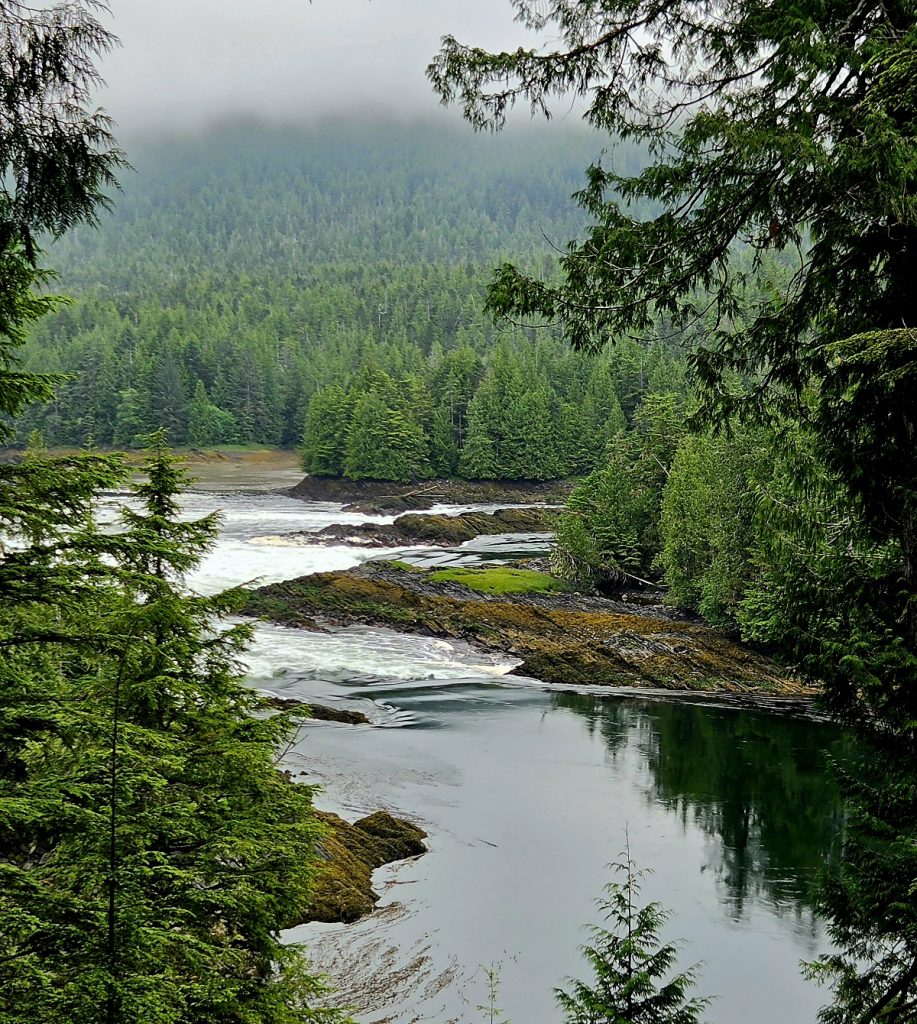
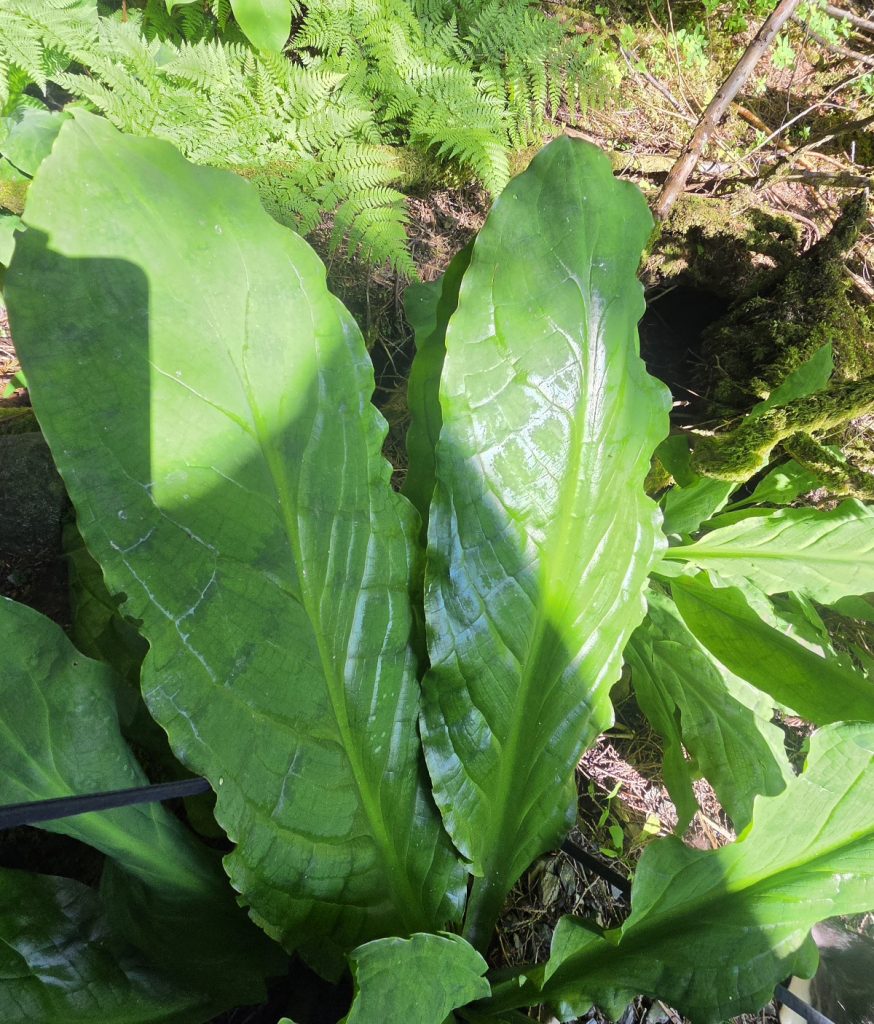
We saw the rapids that are influenced by the direction of the tide and enjoyed the enormous evergreen trees and skunk cabbage throughout the forest.
The Butze Rapids change with the tide.
Skunk cabbages have enormous leaves!
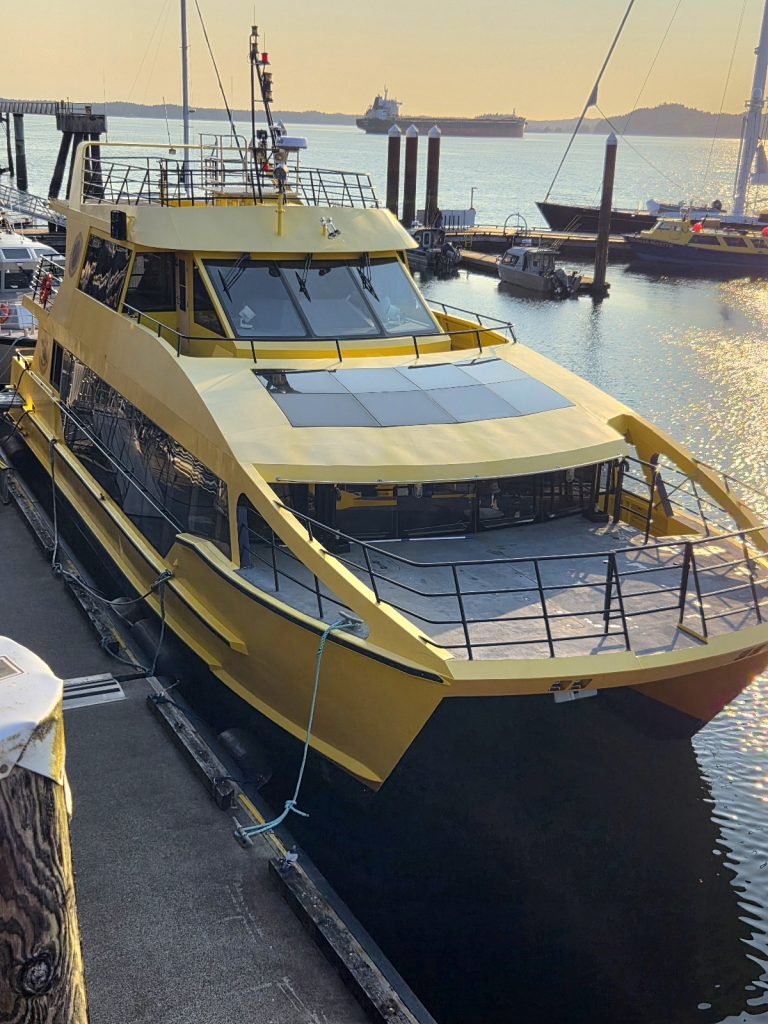
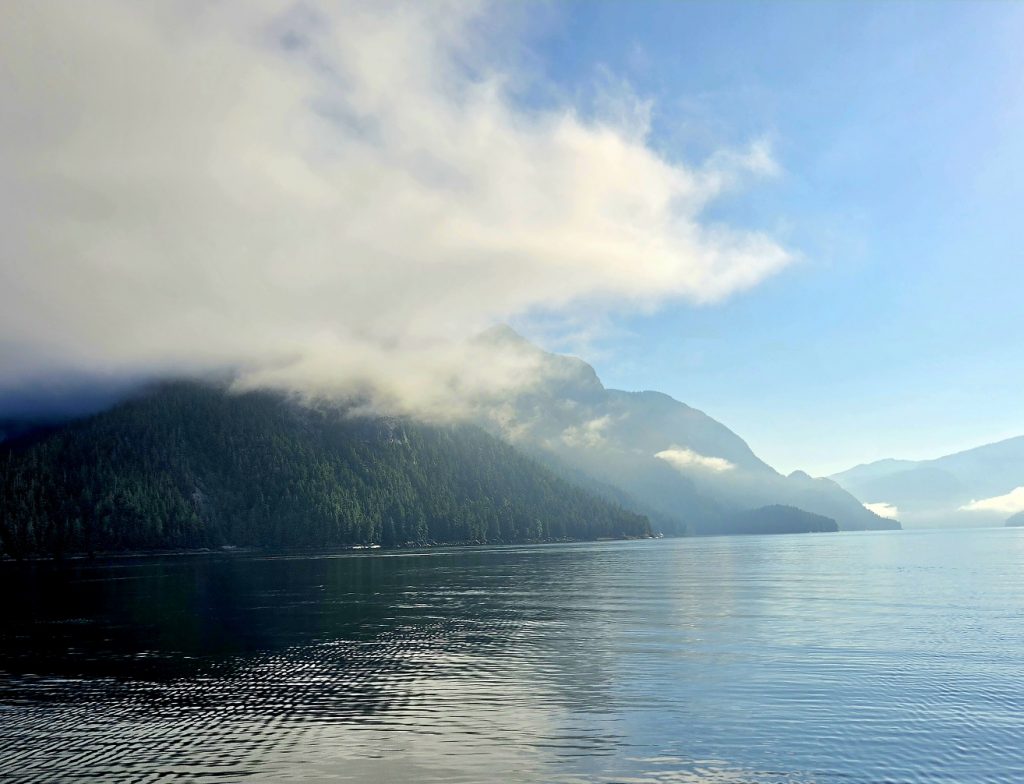
Next morning, we got up at 4:30 a.m. and left the campground at 6:00 a.m. to begin our Prince Rupert Adventure Tour, a grizzly bear viewing opportunity through the Khutzeymateen Valley in the Great Bear Rainforest.
The boat for our grizzly bear adventure
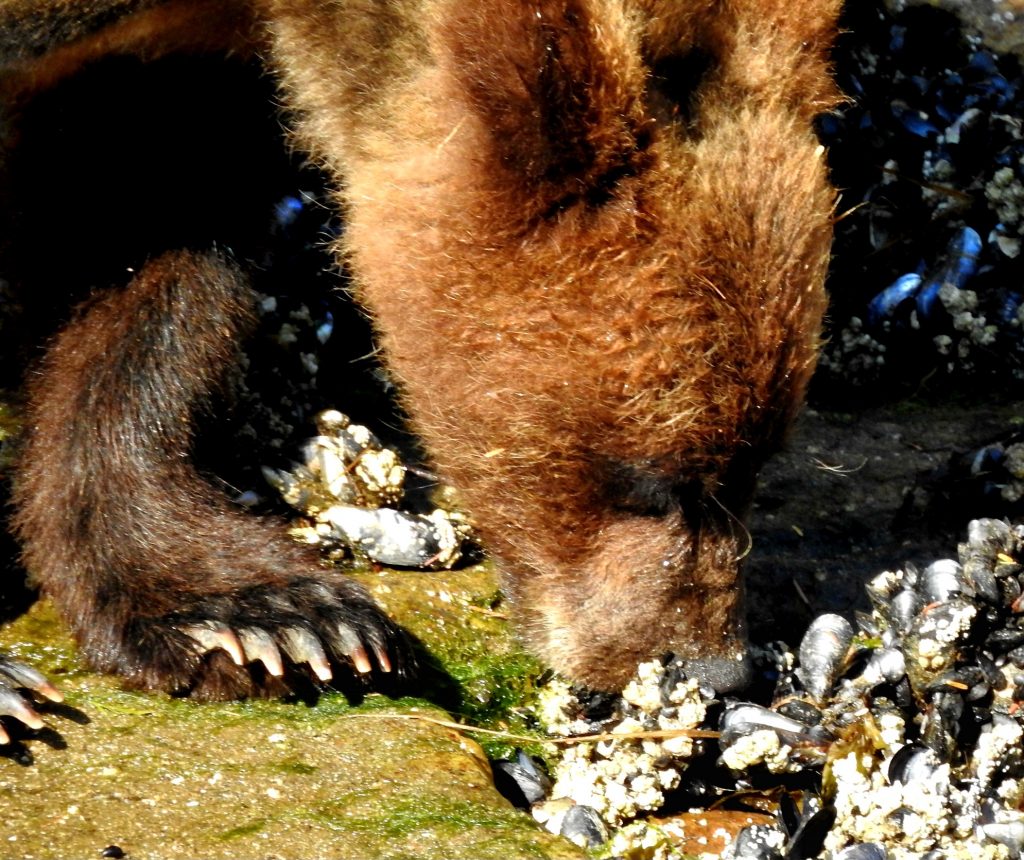
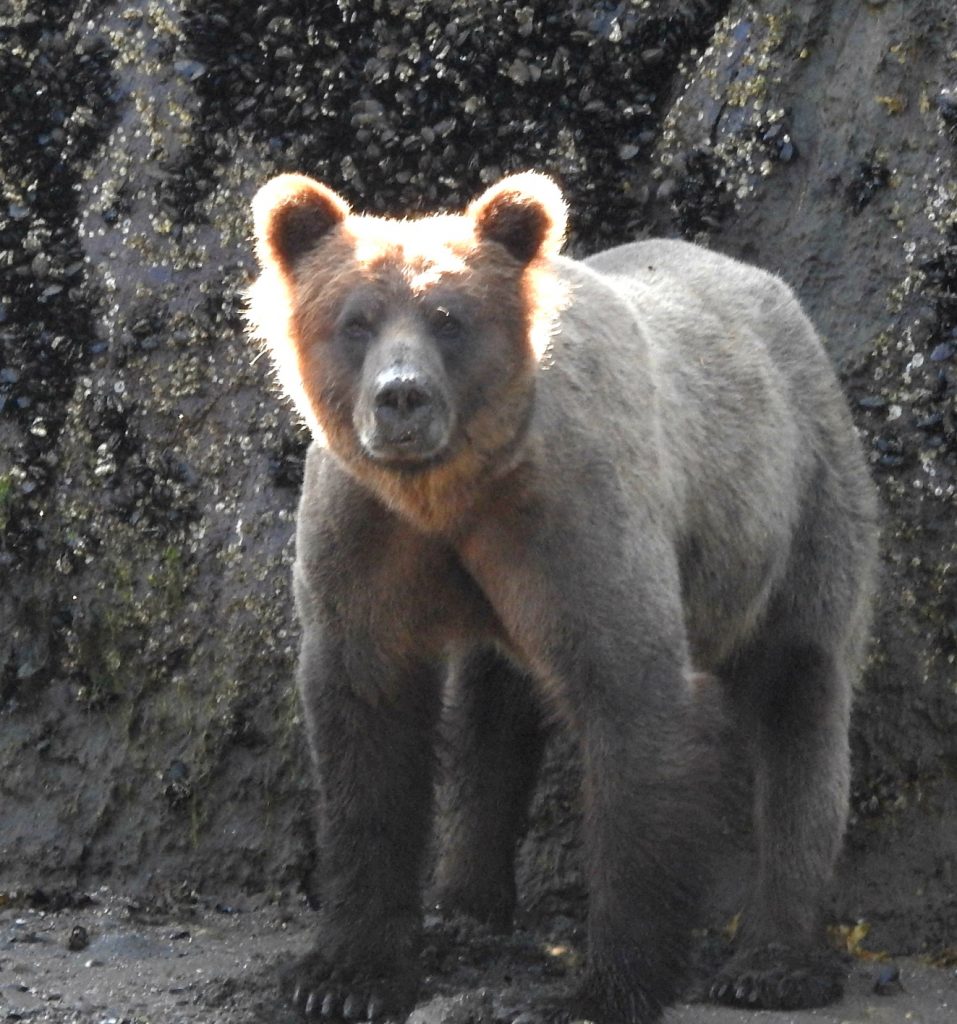
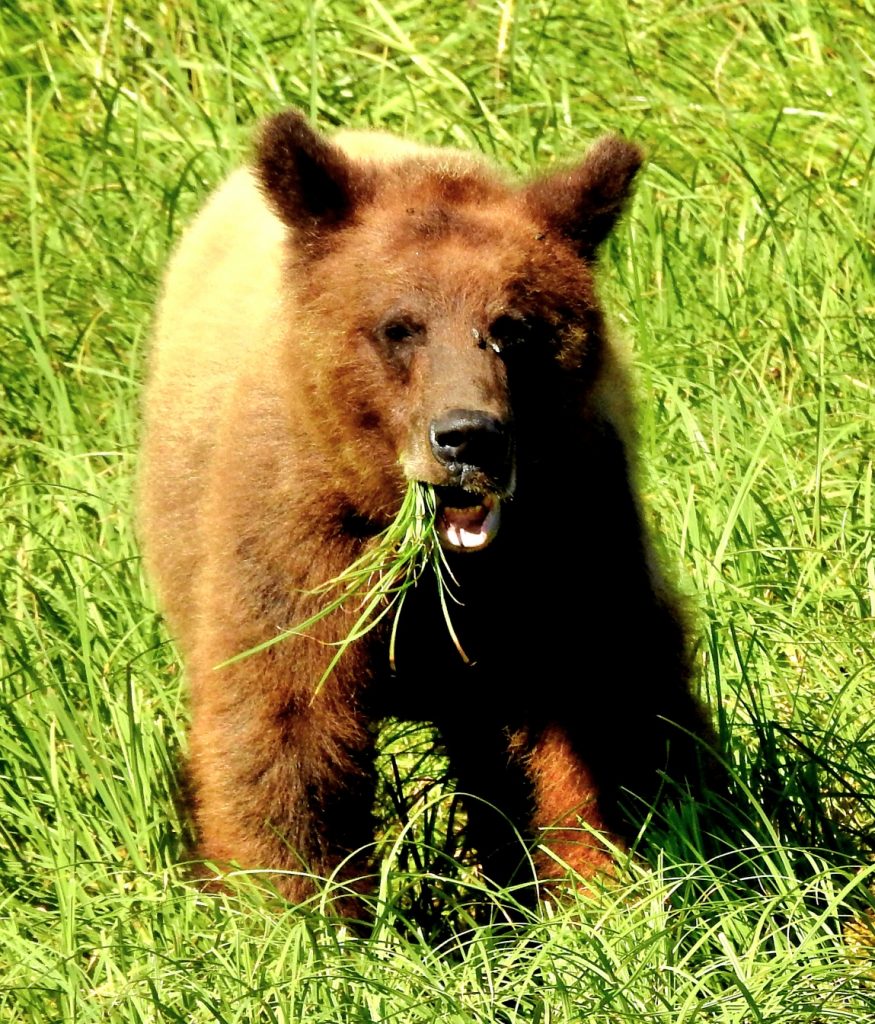
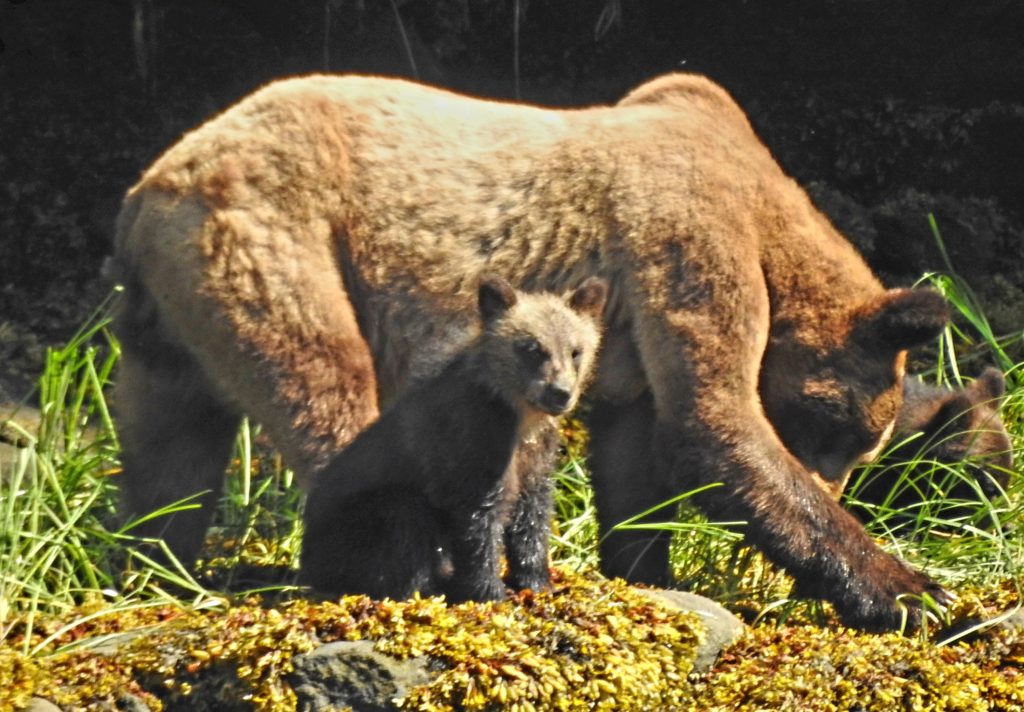
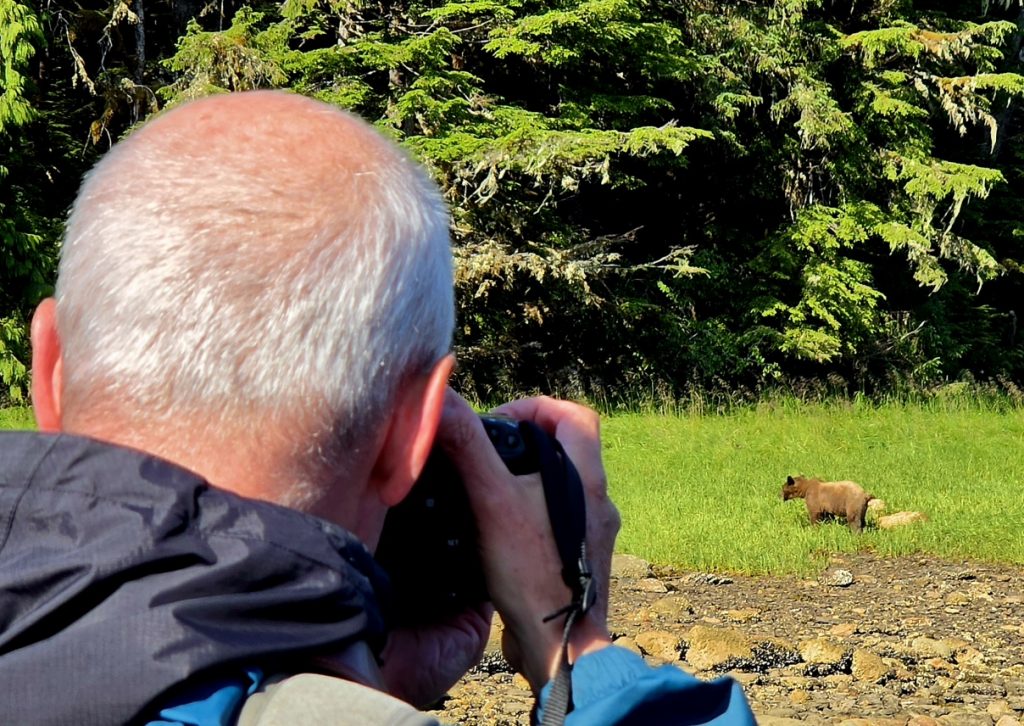
And what an adventure it was! We saw 8 different grizzly bears, including two cubs of the year (COYs), and three sub-adults. Mostly they were eating sedge grass, which is very nutritious and fills them up until the salmon run later in the season.
Howard zeroes in on one of the grizzlies with his camera.
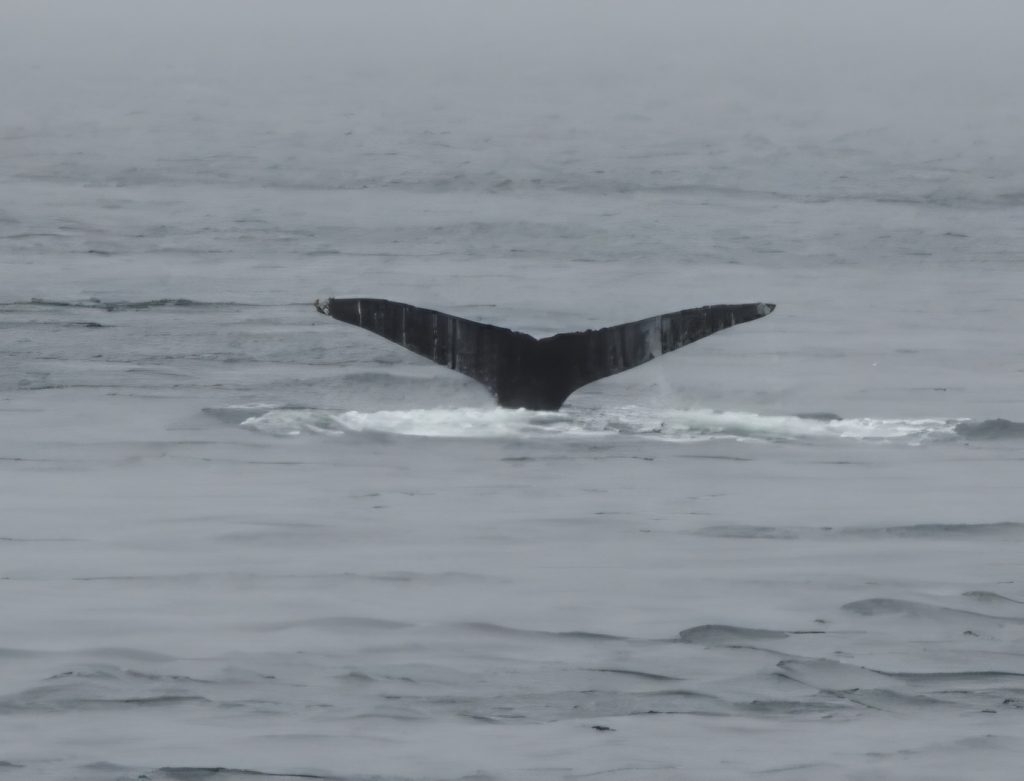
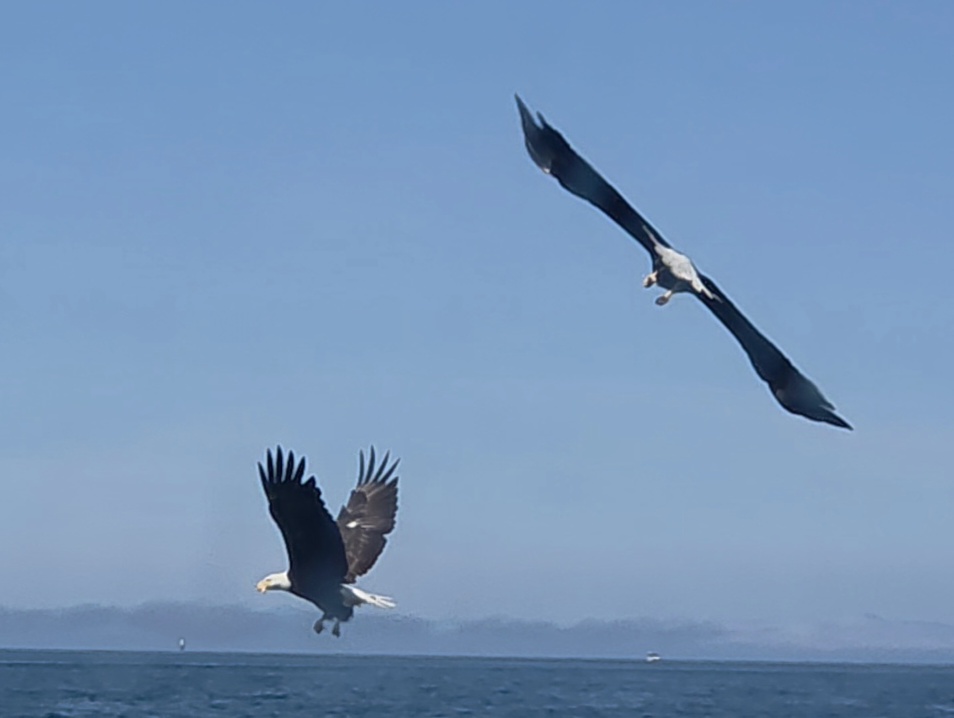
We also saw humpback whales and lots of bald eagles.
One of several humpback whales we saw
Bald eagles swarmed the boat on our return.
This was a glorious day with mystical fog in the morning and bright sunshine in the afternoon. What a great experience to be up close to these majestic omnivorous mammals and raptors!
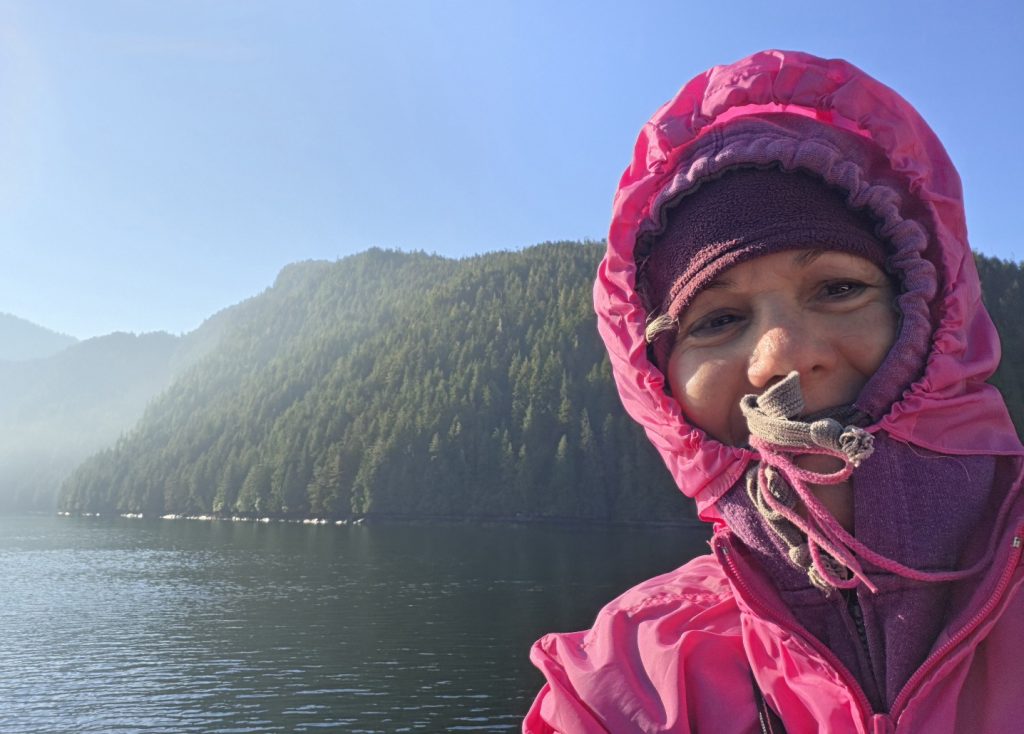
All bundled up--it was cold out there in the morning!
And what a wonderful way to cap off our time in the Prince Rupert area! Watch this short video clip of the humpback whales, bald eagles, and young grizzly bears, Bonnie and Clyde.
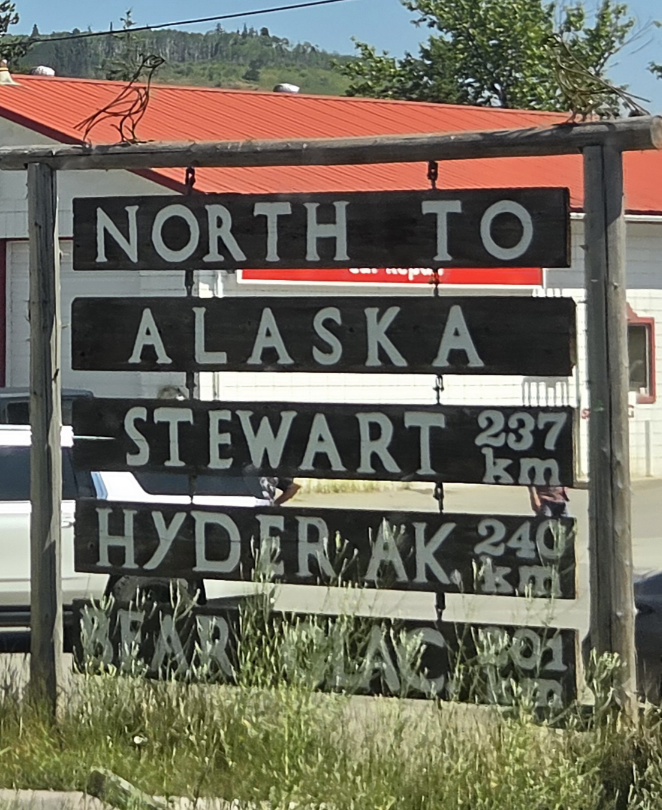
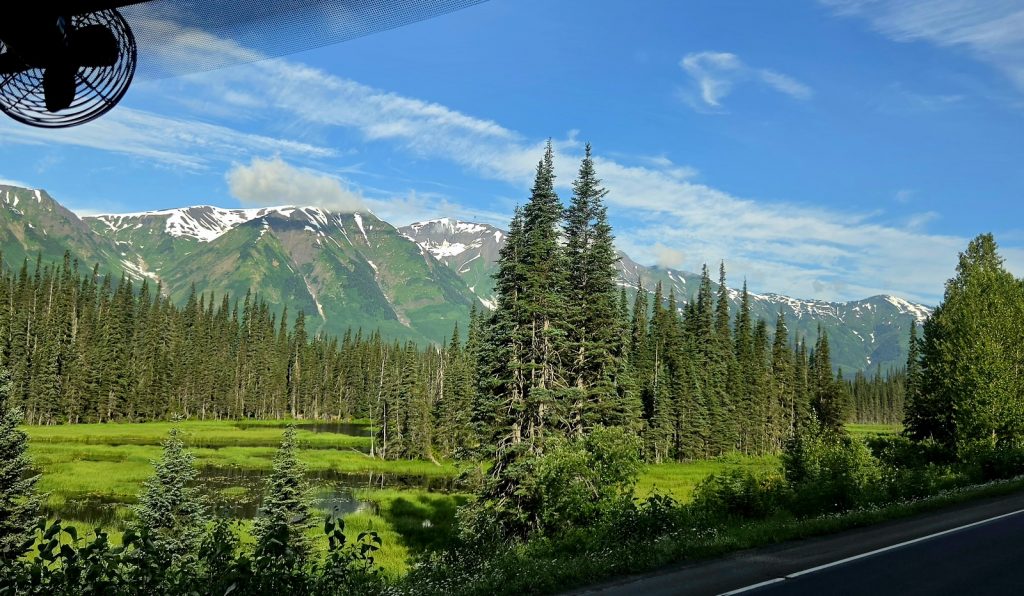
We backtracked the next morning on the Yellowhead Highway, turning north onto the Cassiar Highway for our next BC adventure. The Cassiar is an alternate route to the Alaska Highway and is very remote. We made sure to fill up our gas/diesel tanks at specific locations because services are few and far between.
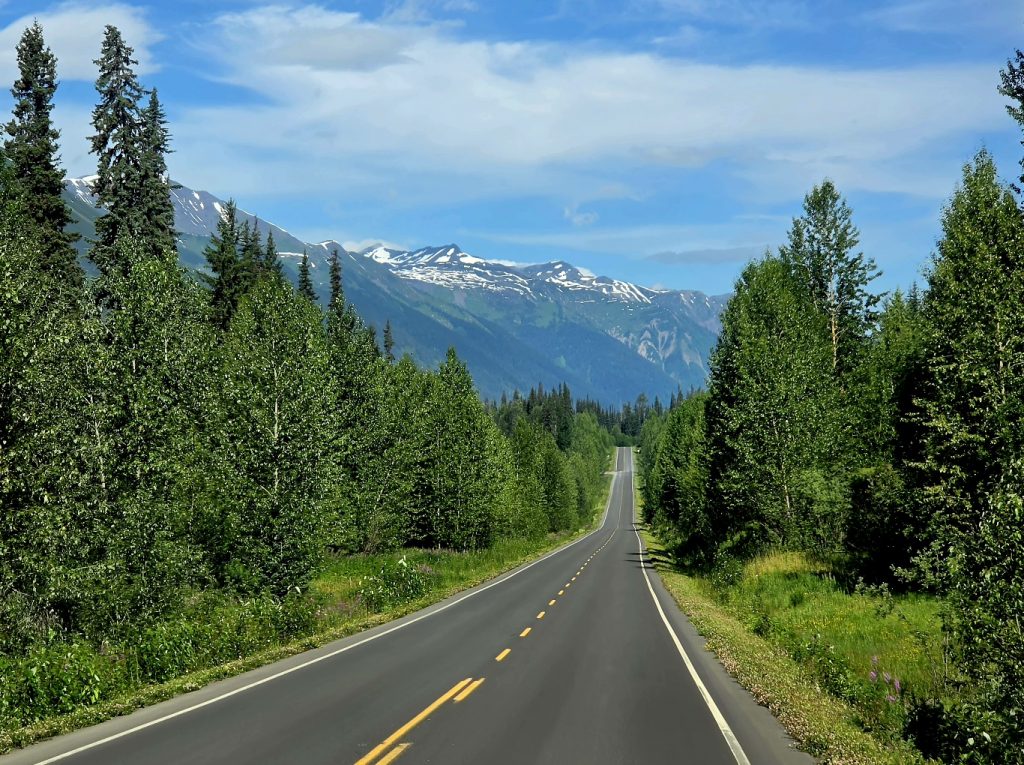
Lots of views like this along the way
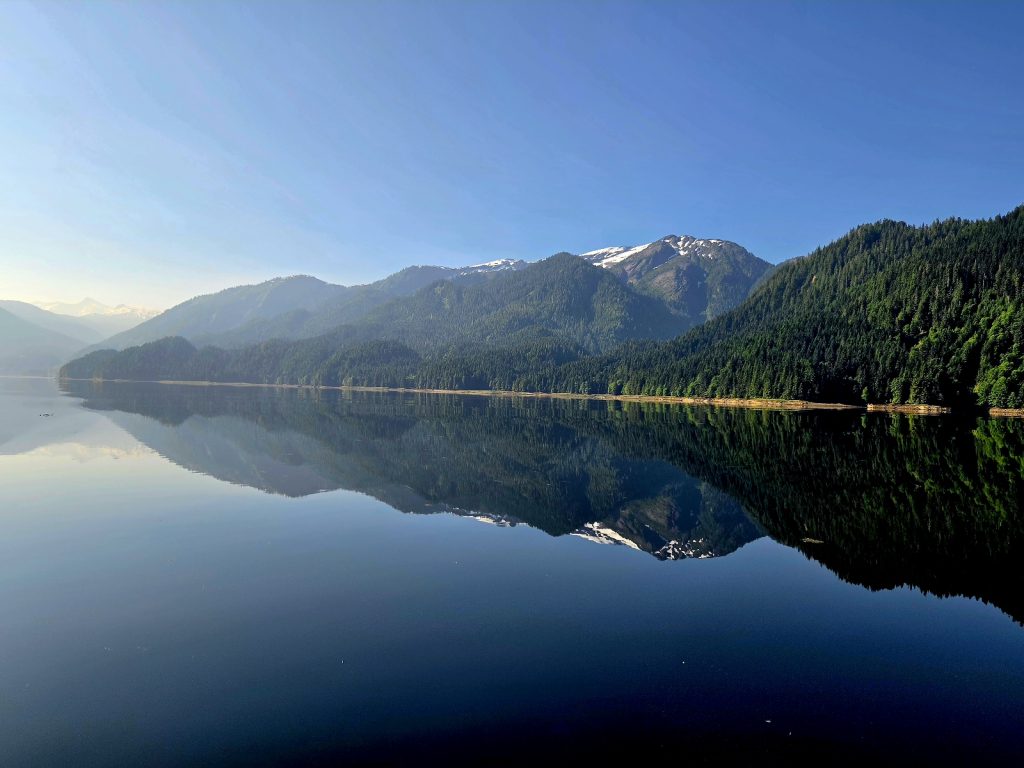
After a beautiful drive, we camped at Meziadin Lake Provincial Park, one of the most beautiful campsites you could imagine. We were able to reserve sites with electricity that were right on the lake and enjoyed the views all evening long.
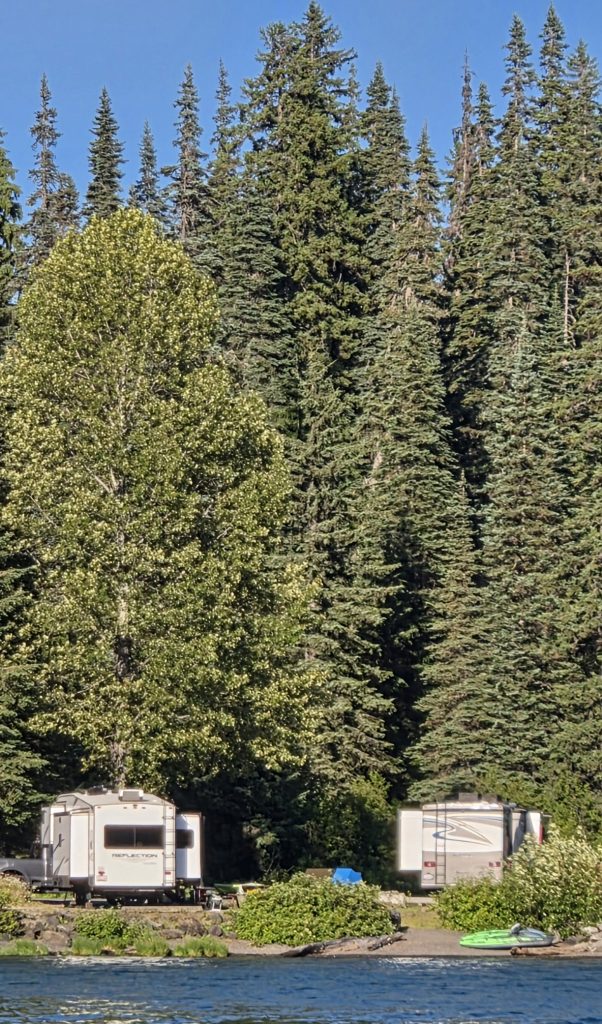
The view of our RVs from the other side of the lake
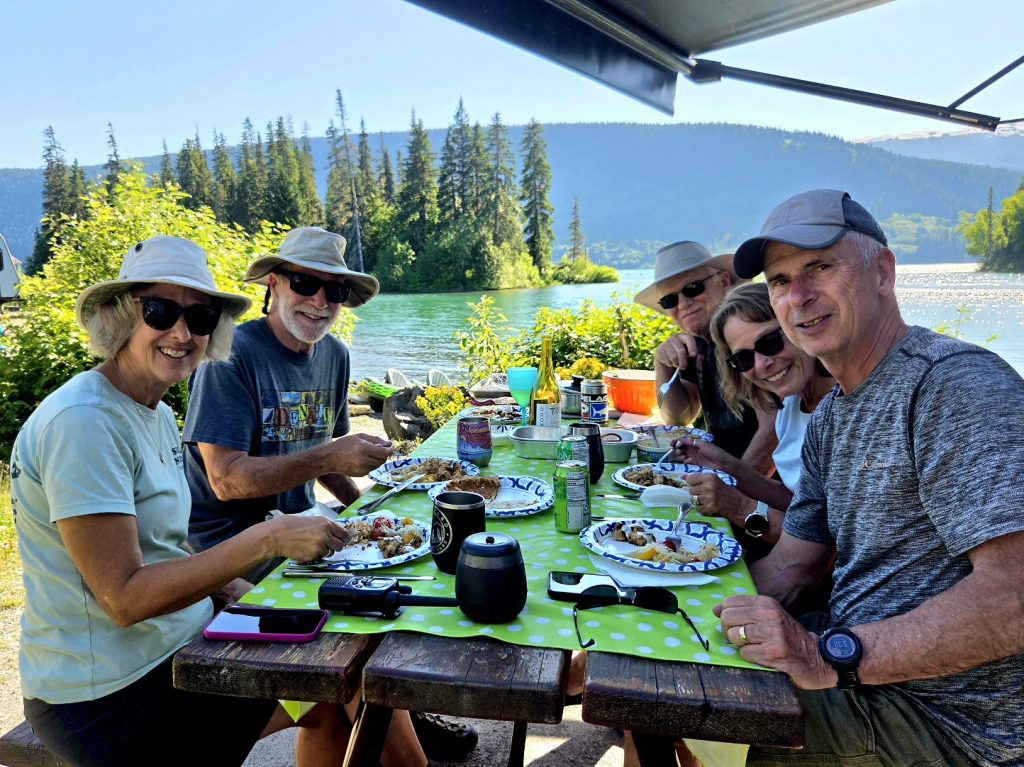
Dinner together at Meziadin Lake
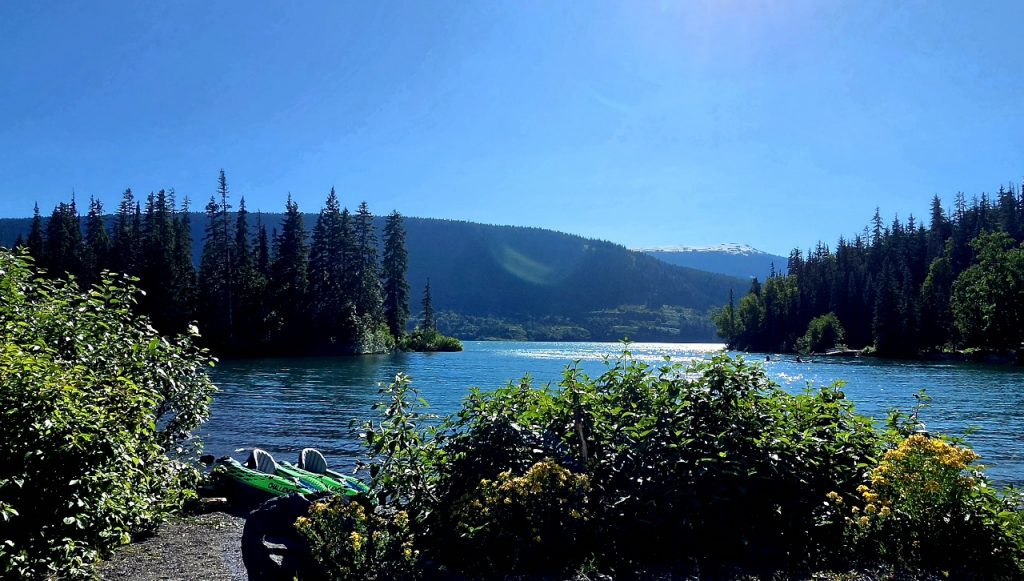
Our view of Meziadin Lake
Next day we had another beautiful drive to Kinaskan Lake Provincial Park, a first-come, first-served campground, where we had our pick of sites on the lakeshore. It was incredibly quiet and peaceful there, and we all survived a night with no hookups (no electricity, water, or sewer—but we were able to run our generator for a while in the evening).
The view from the RV
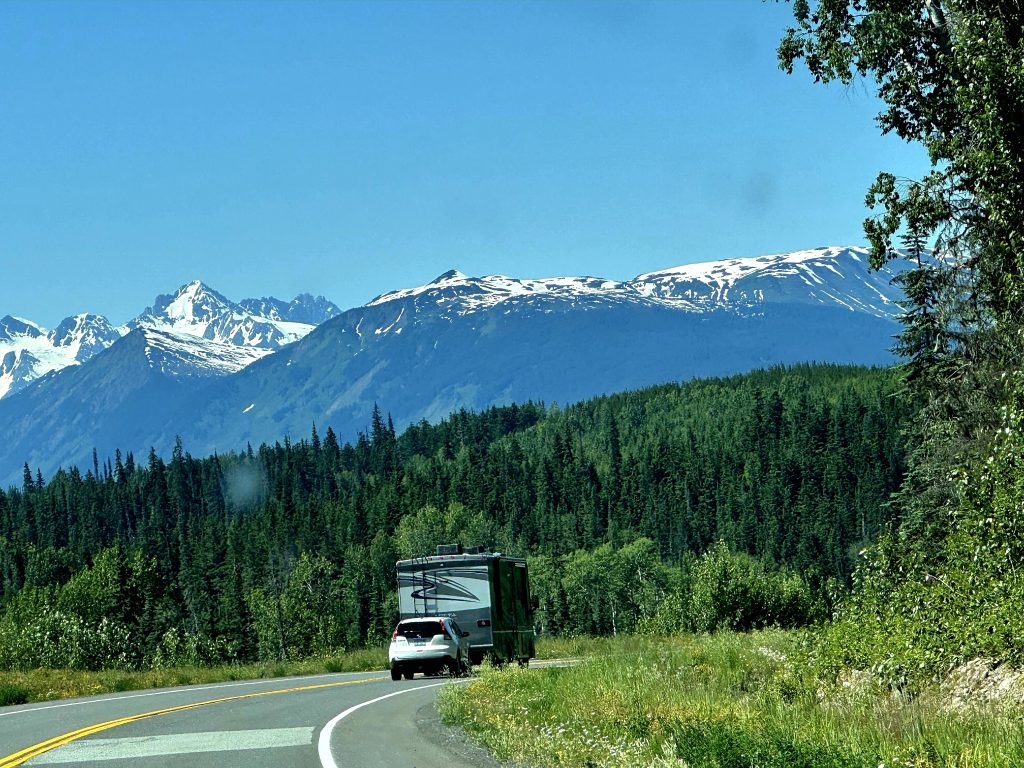
The Cassiar Highway had many, many stunning views (photo by Jacky--that's our RV in the picture).
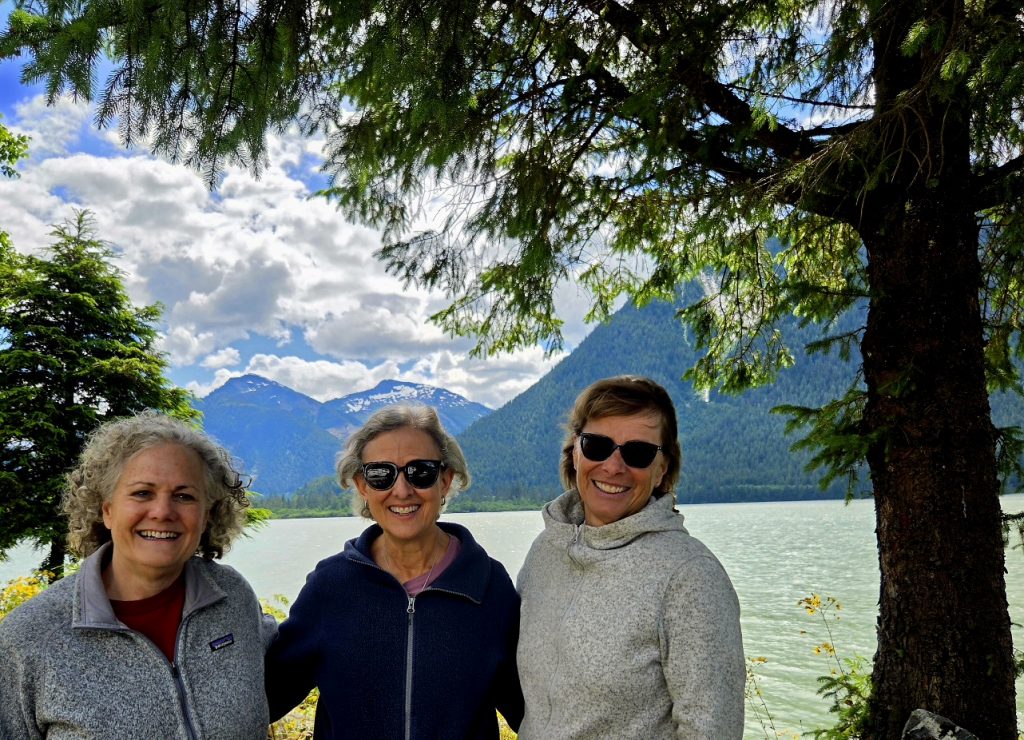
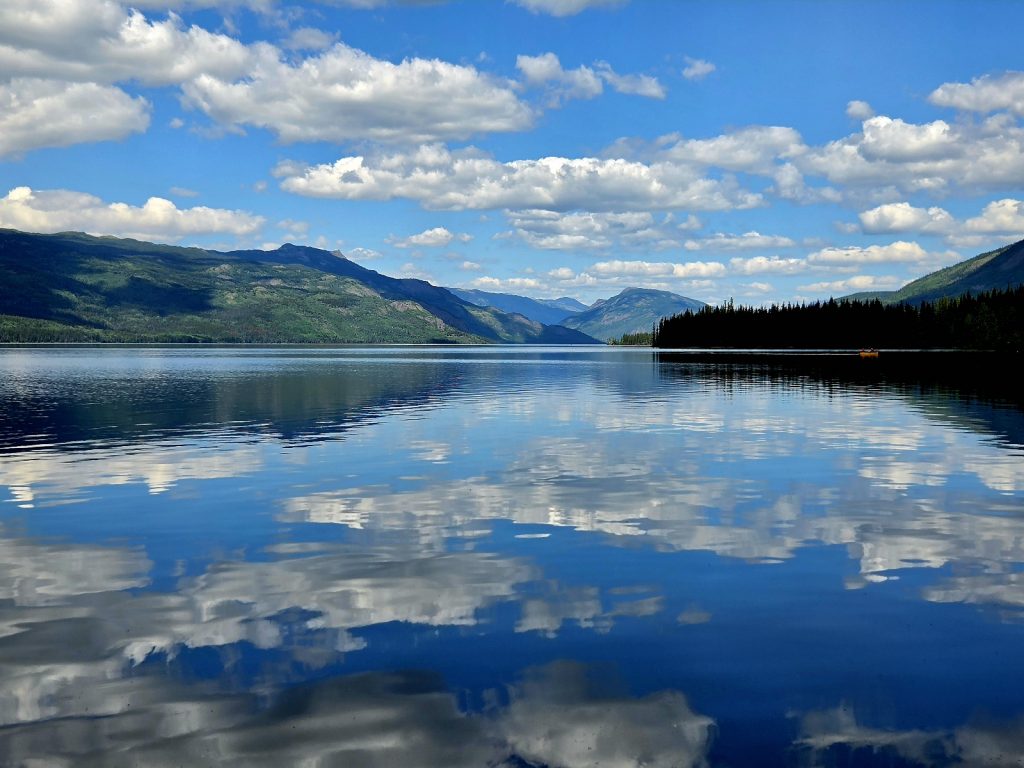
We had beautiful weather and Kinaskan Lake was gorgeous!
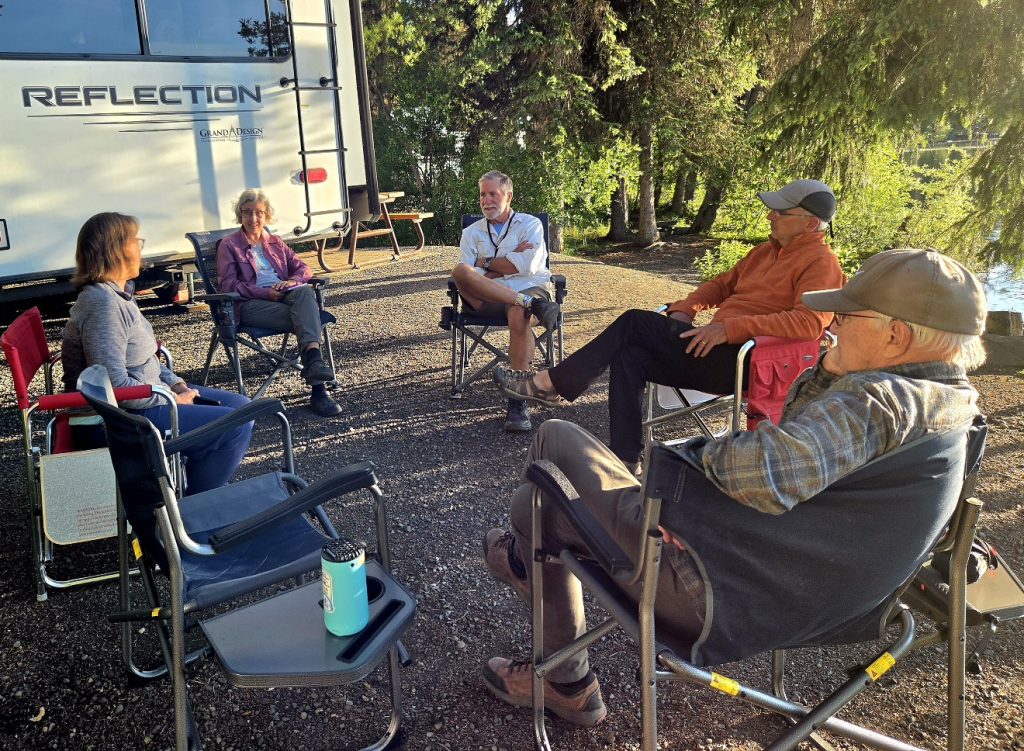
No campfire--too hot, but lots of good conversation
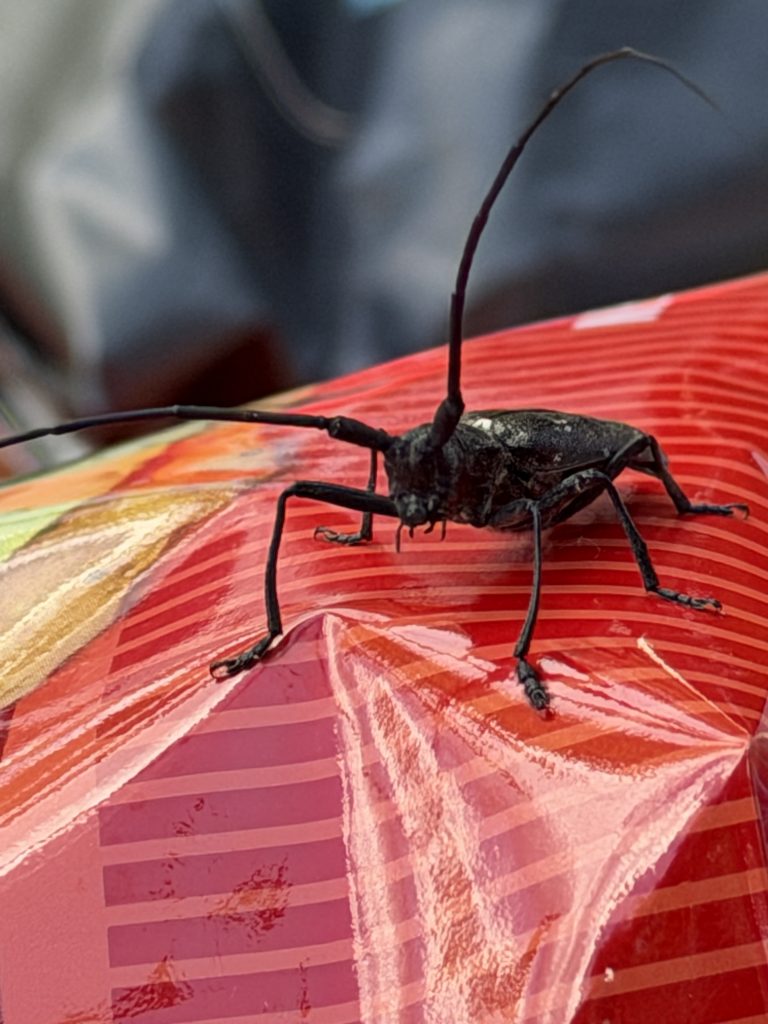
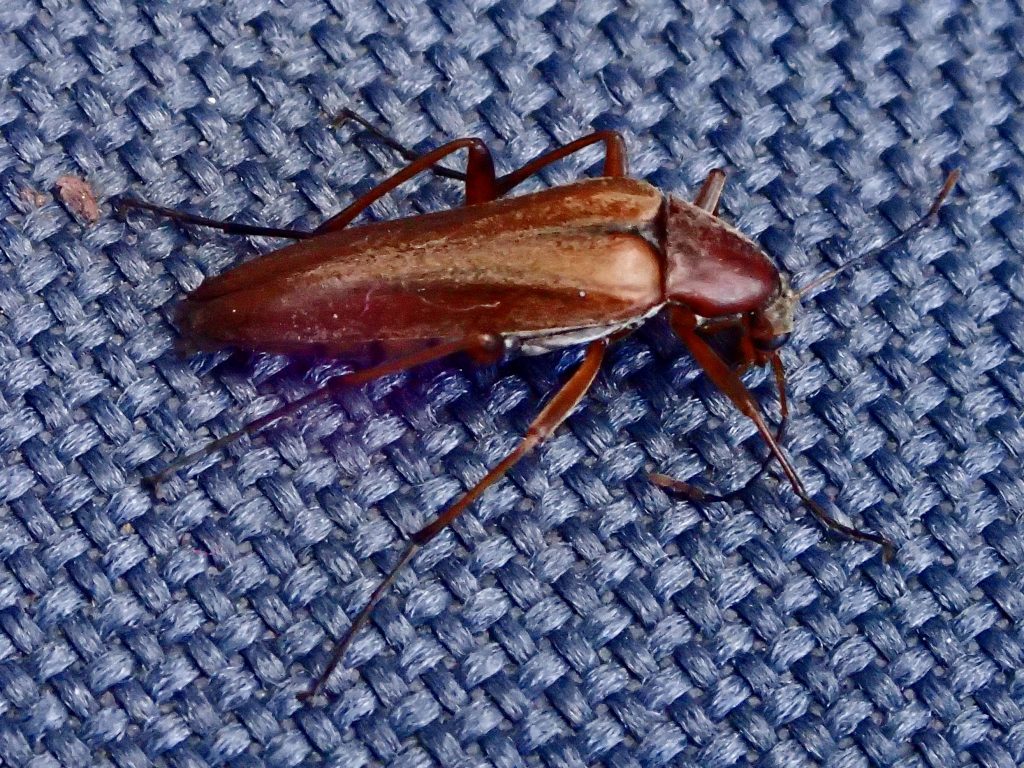
The bugs of Kinaskan Lake
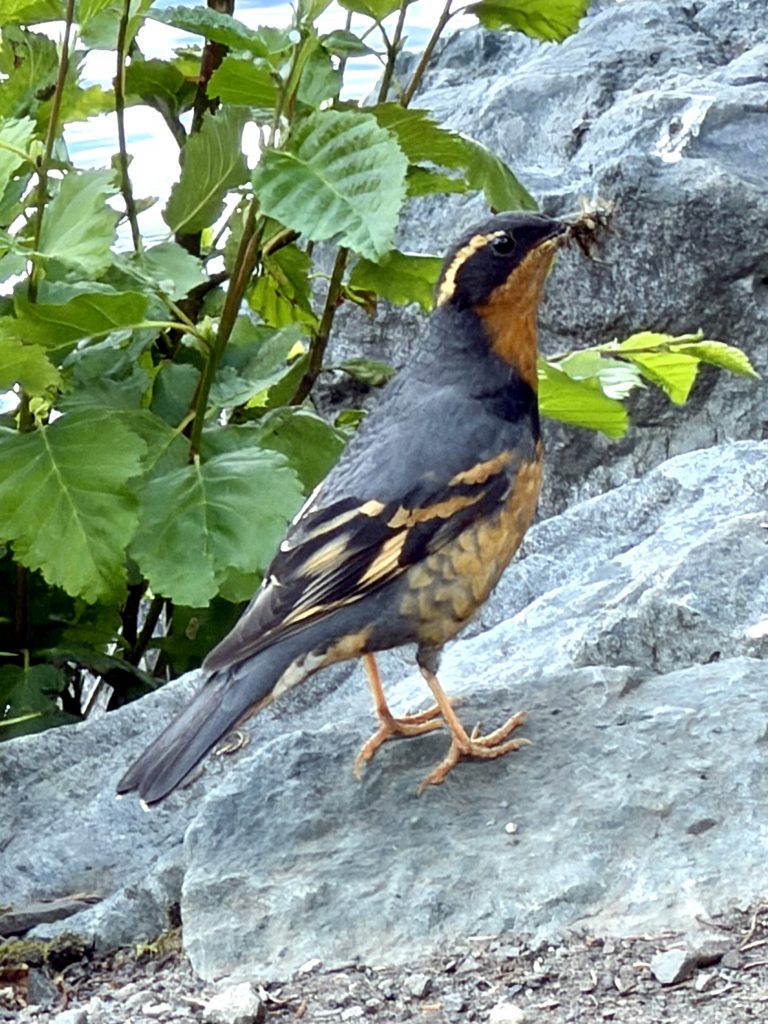
And many beautiful birds, including this varied thrush.
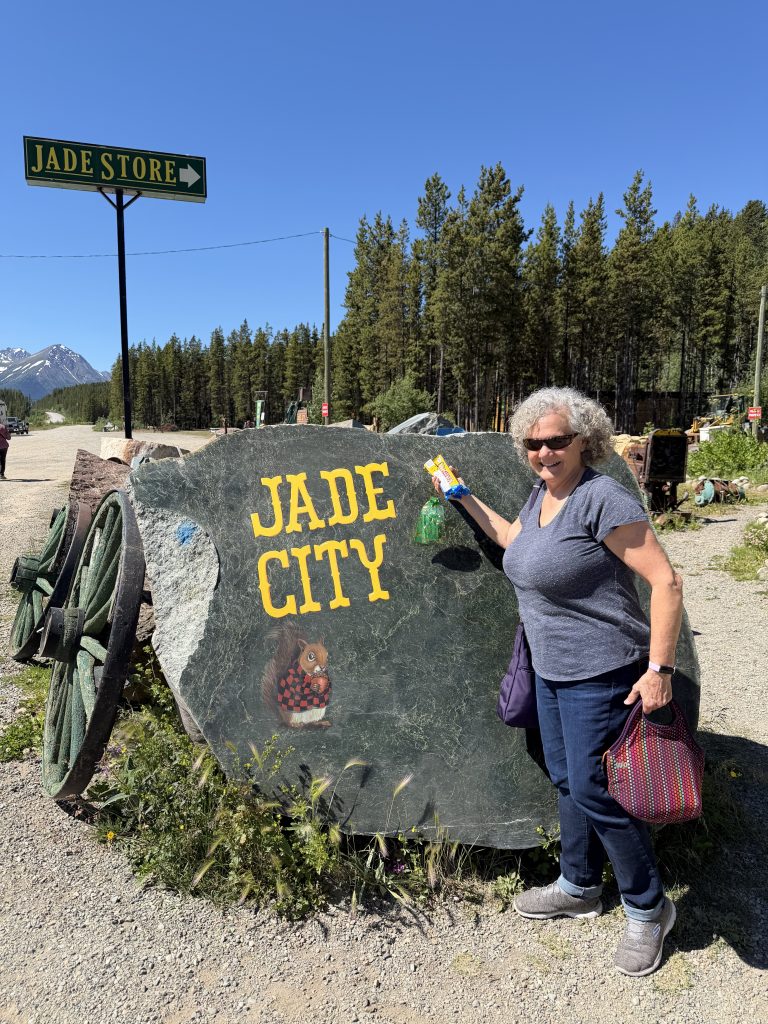
After stopping at Jade City (a business that sells some of the 1 million pounds of jade mined in BC each year), and viewing a black bear on the road, our adventure in Northwest British Columbia came to an end when we entered the Yukon Territory (next blog post). What a gorgeous part of the continent is Northwest BC!